A School Perspective on Building Lifelong Learners
As early as 2016, Dr. Nicholas Kardaras wrote in his book ‘Glow Kids: How Screen Addiction is Hijacking Our Kids and How to Break the Trance’- “Even if a child can’t experience something firsthand, then at least when he or she reads about it, the process ignites the child’s imagination—another critically important developmental process. But if the child passively views something on a two-dimensional screen, rather than creating his or her own interior imagery of it, the imagery is programmed for them.”
In today’s fast-paced digital world, children are surrounded by screens—smartphones, tablets, laptops, and televisions. While technology has opened doors to information and innovation, it has also changed how children learn, focus, and engage with language. In this environment, reinforcing the importance of reading is not just relevant—it is essential.
At our school, we believe that nurturing a strong reading culture is one of the most powerful ways to support holistic development. The benefits of reading books go far beyond academics—they shape thinking, creativity, emotional intelligence, and lifelong learning habits.
Why the Importance of Reading Matters More Than Ever
The importance of reading lies in its ability to build deep, meaningful engagement with ideas. Unlike screen-based content, which is often fast-paced and fragmented, reading encourages children to slow down, reflect, and imagine. It is also a more active experience whereas absorption of screen based content may be predominantly passive, even in ‘interactive’ experiences.
Cognitive research consistently shows that reading is an active mental process. It strengthens attention, enhances comprehension, and builds critical thinking skills. In contrast, excessive screen exposure—especially passive consumption—can reduce focus and lead to superficial learning. It has also led to a diminished cognitive capacity for learning and a dependence on ‘instant’ success, as opposed to the slower development of cognitive frameworks in the brain through reflective processing.
For school-aged children, this distinction is crucial. Classrooms demand sustained attention, problem-solving, and interpretation—skills that are directly strengthened through regular reading.
The Benefits of Reading Books for Brain Development
One of the most compelling reasons to prioritise reading is its impact on the developing brain. The benefits of reading books are deeply rooted in neuroscience.
Studies using brain imaging have shown that children who read regularly develop stronger neural connections in areas associated with language, memory, and executive function. Reading stimulates multiple regions of the brain simultaneously—processing words, constructing meaning, and visualising ideas.
In contrast, excessive screen time has been linked to reduced development in these same areas, particularly those related to language and self-regulation.
Simply put, when children read, their brains are actively building pathways for learning. This highlights the profound importance of reading in the early and middle school years, when brain development is at its peak.
Building Language and Communication Skills
The benefits of reading books are especially evident in language development. Books expose children to rich vocabulary, varied sentence structures, and new ideas that go beyond everyday conversation.
Children who read regularly:
- Develop stronger vocabulary and comprehension
- Express themselves more clearly in speech and writing
- Build confidence in communication
On the other hand, excessive reliance on screens—especially passive viewing—has been associated with delays in language acquisition and reduced verbal interaction.
Furthermore, children are starved for ‘connection’, which is what they seek through the entire gamut of screens and social media networks. Development of reading as a habit will also enable them to form connections with ideas that resonate with them, or people who spark a reflection regarding something, all of which enriches their ability to comprehend, communicate and most importantly, think for themselves.
Reading and Academic Excellence
The importance of reading is closely linked to academic success across all subjects—not just language arts.
Students who cultivate strong reading habits tend to:
- Perform better in comprehension-based subjects
- Develop stronger analytical and reasoning skills
- Retain information more effectively
Research has consistently shown that reading from physical books leads to better understanding and recall compared to reading on screens. This is because books allow for deeper engagement, fewer distractions, and better cognitive mapping of information.
The benefits of reading books extend to mathematics, science, and social studies as well—where understanding complex concepts often depends on strong reading comprehension. Furthermore, the ability to record observations, or delineate logically argued points are crucial to their ability to excel in higher education, as well as in the workplace.
Strengthening Focus in a Distracted World
In a world of constant notifications and quick scrolling, developing sustained attention is becoming increasingly challenging. This is where the importance of reading becomes even more significant.
Reading trains the brain to:
- Focus for extended periods
- Follow complex narratives and arguments
- Engage in deep, uninterrupted thinking
These are essential skills not only for academic success but also for life beyond school.
The benefits of reading books include improved concentration and mental discipline—qualities that help children navigate both digital and real-world challenges with confidence.
Nurturing Imagination and Emotional Intelligence
Books do more than inform—they inspire. One of the most beautiful benefits of reading books is their ability to transport children into different worlds, perspectives, and experiences.
Through stories, children:
- Develop empathy and emotional understanding
- Learn to see the world from different viewpoints
- Build creativity and imagination
This emotional engagement is something screens often struggle to replicate. Reading allows children to co-create the story in their minds, making the experience deeply personal and meaningful.
The importance of reading therefore extends beyond academics—it plays a vital role in shaping compassionate, thoughtful individuals.
A Balanced Approach: Reading Alongside Technology
As a forward-thinking institution, we recognise that technology is an integral part of modern education. However, balance is key.
The goal is not to eliminate screens but to ensure that they do not replace the benefits of reading books. High-quality digital tools can support learning, but they should complement—not substitute—deep reading experiences. Also, the duration of screen exposure should be limited to half and hour or less in any one serving, in order to combat the ills of screen addiction with mindfulness.
By consciously prioritising the importance of reading, we help students develop both digital literacy and strong foundational skills.
How We Foster a Reading Culture at School
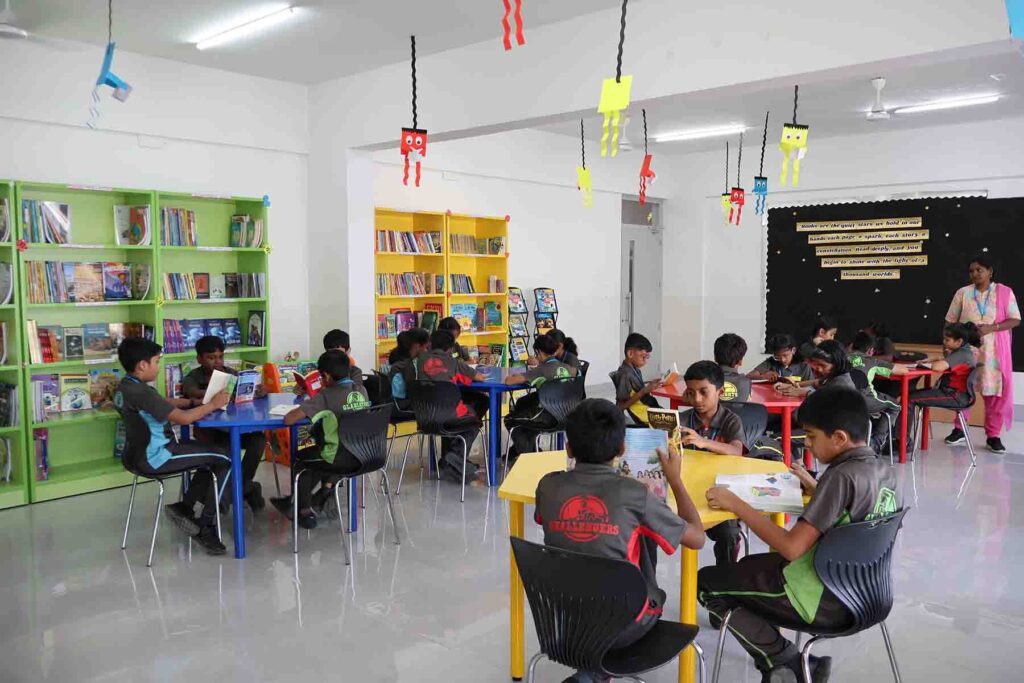
At our school, we actively promote the importance of reading. Out early learners are enabled to develop reading skills which support their ability to engage with the written word even outside their school books. We also promote reading through:
- Well-stocked libraries and curated reading programmes
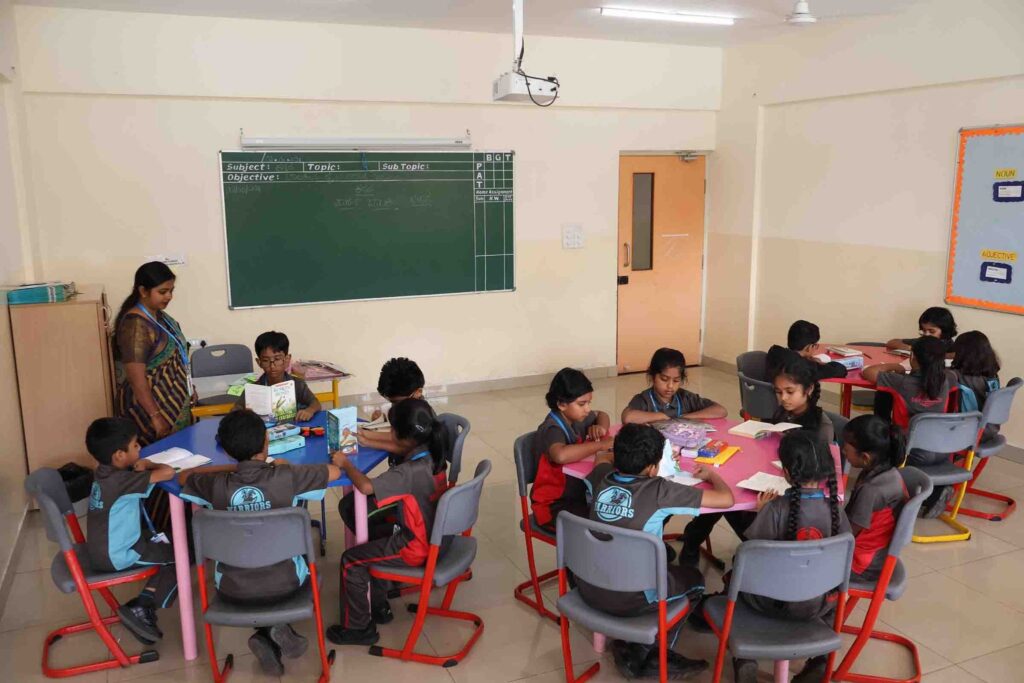
- Well structured reading plans for young learners in the Primary section
We also advocate with parents to extend the benefits of reading books beyond the classroom.
Simple habits like daily reading time, shared storytelling, and access to books at home can make a lasting difference.
Conclusion: Turning Pages, Building Futures
In a world dominated by screens, choosing to prioritise reading is a powerful decision. It is a choice that we must guide our children to make actively, not as a chore, but as a time of day they look forward to and seek voluntarily. The competition with screens is stiff, but one that can be won with mindful parenting and using reading as a shared time with parents, eventually graduating to independent practice.
The importance of reading lies not just in academic achievement, but in shaping how children think, feel, and understand the world.
The benefits of reading books—from stronger brain development and language skills to improved focus and empathy—make it one of the most valuable investments in a child’s future.
As educators and parents, our shared responsibility is clear: to ensure that every child experiences the joy and power of reading.
Because when children read, they don’t just learn—they grow.
(Explore More About Child Learning Blogs)
(Know More About Chrysalis High School)
Written By – Amrita Paul,
School Coordinator – Chrysalis High
Frequently Asked Questions:
Reading helps children develop focus, critical thinking, and imagination, unlike passive screen consumption which can limit deep learning and attention span.
The benefits of reading books include better brain development, improved vocabulary, stronger comprehension skills, and enhanced emotional intelligence in children.
Excessive screen time can reduce attention span and language development, while reading promotes active thinking, comprehension, and emotional intelligence.
Parents can build reading habits by setting daily reading time, reading together, providing access to books, and limiting screen exposure.
Yes. The importance of reading is directly linked to academic excellence across all subjects, including math and science. Strong reading habits enhance comprehension, enable students to follow complex narratives, and improve the ability to record observations and argue points logically—skills essential for higher education.
Leading institutions like Chrysalis High, recognized among the best CBSE schools in Bangalore, prioritize a balanced approach. We foster a deep reading culture through curated reading programs, well-stocked libraries, and structured plans for young learners to ensure that digital literacy is supported by strong foundational reading skills.