“There’s no way around hard work. Embrace it. You have to put in the hours because there is always something you can improve on.” — Roger Federer
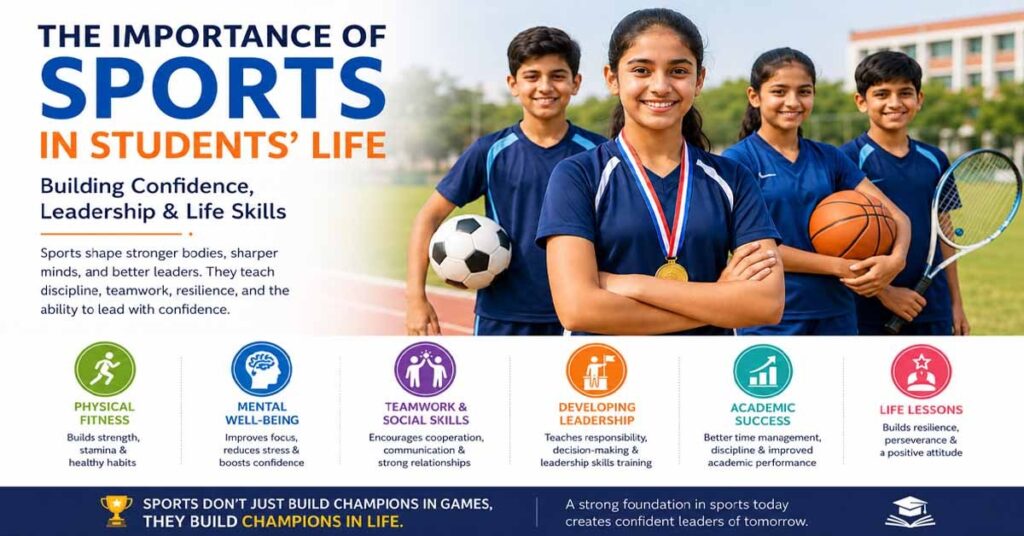
Sports play a vital role in offering numerous benefits for students beyond physical fitness. The importance of sports in students’ lives can be seen in how they contribute to a child’s overall growth and development. Sports is a medium which helps students become healthier, more confident, and better prepared for future challenges. Students who play sports are seen to have improved focus, discipline, and time management while also teaching valuable life lessons that cannot always be learned inside a classroom.
Today, schools are giving equal importance to academics and extracurricular activities because both are necessary for the holistic development of students. Chrysalis High is one such school which promotes sports, and in particular, helps children build confidence, teamwork, and communication skills. Chrysalis also provides excellent opportunities for developing leadership qualities from an early age.
Further in this blog it is explained how sports contribute to physical health, mental development, academic success, and the development of future leaders.
Physical Health Benefits of Sports
Sports play an essential role in maintaining a healthy lifestyle. Playing sports improves stamina, strength, flexibility, and overall fitness. It doesn’t matter which sport students play but the students who regularly participate in any sports are generally more active and energetic throughout the day.
Builds a Healthy Lifestyle
- Engaging in sports from an early age helps students develop healthy habits.
- Regular physical activity creates a strong foundation for lifelong fitness.
- Sports encourage discipline and routine, which are important in daily life.
- Along with proper nutrition and adequate rest, sports contribute to overall well-being.
- They discourage sedentary behaviour and reduce the risk of lifestyle diseases such as diabetes and hypertension.
- Students also learn to take responsibility for their health and fitness.
Improves Immunity and Reduces Health Risks
Consistency is key to improved immunity. Regular participation in sports strengthens the immune system and makes the body more resistant to illness.
- Sports improve blood circulation and oxygen supply throughout the body.
- Physical activity helps reduce stress levels, which positively impacts immunity.
- It lowers the risk of heart disease, obesity, and other health problems.
- Sports improve lung capacity and overall body endurance.
- Students who are physically active often develop stronger bodies and healthier lifestyles.
The importance of sports in students’ life becomes very clear when we look at these long-term health benefits.
Role of Sports in Mental Development
Sports contribute significantly to mental growth and emotional well-being. Students who actively participate in sports often develop better concentration and stronger problem-solving abilities. Playing sports involves interacting with different students from various different regions. This teaches them how to handle each other, especially in conflict situations.
Mental Agility and Focus
Sports require players to stay alert and focused during practice sessions and competitions. This helps improve concentration and mental sharpness.
Improves Cognitive Abilities
Physical activities stimulate brain function and support skills such as:
- Decision-making
- Problem-solving
- Critical thinking
- Memory retention
These abilities are useful not only in sports but also in academics and everyday life.
Reduces Stress and Anxiety
Sports act as a natural stress reliever. Physical activity releases endorphins and serotonin, which improve mood and reduce feelings of stress and anxiety.
Students who participate in sports often show a more positive attitude towards challenges. They become more resilient and are better equipped to handle pressure.
Social and Emotional Growth Through Sports
Sports provide an excellent platform for social interaction and emotional development. They teach students how to work with others and manage emotions effectively.
Developing Leadership Through Sports
To develop leadership skills sports is an excellent medium and one of the most important benefits of sports is developing leadership skills among students. Sports create situations where students must take initiative, motivate teammates, and make decisions under pressure.
Whether they are captains or team members, students learn the responsibilities that come with being a leader. This practical experience is often more effective than theoretical lessons on leadership.
Understanding Leader and Leadership
Sports help students understand the difference between a leader and leadership and Chrysalis High gives them opportunity by having various sports on a day to day basis.
A leader is a person who guides and inspires others, while leadership is the ability to influence a group towards achieving a common goal. Through sports, students experience both concepts in real-life situations.
They learn that leadership is not about giving orders. It is about supporting others, taking responsibility, and setting a positive example.
Develops Empathy and Teamwork
Sports teach students to:
- Support teammates during victories and defeats.
- Respect different opinions and perspectives.
- Cooperate to achieve common goals.
- Understand the importance of teamwork.
These experiences foster empathy, cooperation, and strong interpersonal relationships.
Teaches Emotional Balance
Winning and losing are both part of sports. Students learn to handle success with humility and setbacks with maturity.
This helps develop:
- Patience
- Self-control
- Perseverance
- Emotional resilience
These qualities are important for both personal and academic success.
Impact of Sports on Academic Performance
“Winning isn’t everything, but wanting to win is.” — Vince Lombardi
Many people believe that sports distract students from studies. However, research and practical experience often show the opposite.
Students who participate in sports frequently perform better academically because they develop discipline, focus, and time management skills.
Encourages a Balanced Lifestyle
Sports teach students how to balance academics and extracurricular activities effectively.
- Students learn to manage their schedules.
- They become better at prioritising tasks.
- Sports provide a healthy break from academic pressure.
- Physical activity refreshes the mind and improves concentration.
A balanced lifestyle allows students to perform well both inside and outside the classroom.
Enhances Critical Thinking and Problem-Solving
Sports often require quick thinking and strategic planning.
Games such as basketball, football, cricket, and chess encourage students to:
- Analyse situations quickly.
- Anticipate opponents’ actions.
- Adapt to changing circumstances.
- Make informed decisions under pressure.
These experiences of playing sports strengthen problem-solving abilities and critical thinking skills that benefit academic learning as well.
Leadership Skills Training Through Sports
Schools today recognize the importance of leadership skills training as part of a student’s overall education. Sports provide one of the most effective environments for developing these abilities.
Unlike classroom lessons, sports offer real situations where leadership must be demonstrated immediately.
Students learn:
- Effective communication
- Decision-making
- Conflict resolution
- Team motivation
- Responsibility and accountability
This type of leadership skills training prepares students for future leadership roles in school, college, and professional life.
Management and Leadership Skills Developed Through Sports
When sports is introduced to students in school it helps students develop valuable management and leadership skills that are useful throughout life. These skills they develop in school helps them in college and also life skills which are important for the betterment of life.
Time Management
Student athletes learn to balance:
- Academic responsibilities
- Sports practice
- Family commitments
- Personal interests
This teaches them how to organise their time efficiently.
Strategic Planning
To become a successful sports performer we often require planning and preparation.
Students learn to:
- Set goals
- Create strategies
- Monitor progress
- Make adjustments when necessary
These are important management and leadership skills that can be applied in future careers.
Team Management
Sports encourage students to work with people from different backgrounds and personalities.
They learn how to:
- Coordinate team efforts.
- Delegate responsibilities.
- Build trust.
- Achieve common objectives.
Such experiences help students become effective team players and future leaders.
Life Lessons Learned Through Sports
As already discussed, sports teaches time management, team management, stress management and strategic planning. Sports teach students valuable lessons that extend far beyond the playing field. It teaches:
Commitment and Hard Work
Students learn that success comes through consistent effort and dedication. There are no shortcuts.
Resilience
Losses and setbacks teach students how to recover from disappointments and continue striving towards their goals.
Confidence
Every achievement, whether small or big, helps build self-confidence. Students begin to believe in their abilities and become more willing to take on challenges.
Responsibility
Sports teach accountability. Students learn that their actions affect not only themselves but also their team.
These lessons contribute significantly to personal growth and future success.
Developing Future Leaders
Schools play a crucial role in nurturing future leaders and that’s how Chrysalis High contributes in developing future leaders through its sports integrated curriculum. With this sports participation, students gain valuable experiences that prepare them for leadership responsibilities later in life.
Sports help students develop:
- Accountability
- Strategic thinking
- Collaboration
- Perseverance
- Communication skills
The process of developing leadership begins when students are given opportunities to take responsibility, support others, and solve problems independently.
These experiences shape confident individuals who understand both leader and leadership qualities.
Conclusion
The importance of sports in students life cannot be overstated. Sports contribute not only to physical fitness but also to mental, emotional, social, and academic development. They help students build confidence, improve focus, and develop resilience.
As one of the most effective extracurricular activities, sports provide excellent opportunities for developing leadership qualities and practical leadership skills training. Students gain a deeper understanding of leader and leadership, while also strengthening important management and leadership skills that will benefit them throughout their lives.
Ultimately, integrating sports into education helps students become well-rounded individuals who are prepared to face personal, academic, and professional challenges with confidence and determination. Chrysalis High shows immense integration of various different sports and performing arts which teaches students not only soft skills but also life skills. Sports do not simply create better athletes; they help create better students, better citizens, and future leaders.
(Explore More About Student Corner Blogs)
(Know More About Chrysalis High School)
Written By – Swapna Paranjpe,
Secondary Teacher – Chrysalis High Budigere
Frequently Asked Questions
The importance of sports in students life goes beyond physical fitness. Sports improve concentration, discipline, confidence, teamwork, and emotional well-being while helping students develop problem-solving abilities, resilience, and leadership qualities. Regular participation also supports better academic performance and overall personality development.
Sports play a significant role in developing leadership by encouraging students to take responsibility, communicate effectively, motivate teammates, and make decisions under pressure. Whether leading a team or supporting others, students gain practical leadership experience that prepares them for future academic, personal, and professional success.
A leader is an individual who inspires and guides others, while leadership is the ability to influence and motivate a team toward achieving common goals. Sports provide real-life situations where students learn to lead by example, collaborate effectively, solve conflicts, and support teammates, helping them understand both leader and leadership in practice.
Extracurricular activities, especially sports, contribute to the holistic development of students by improving physical health, reducing stress, enhancing communication skills, and building self-confidence. They also teach valuable life skills such as teamwork, discipline, time management, and adaptability, helping students excel both inside and outside the classroom.