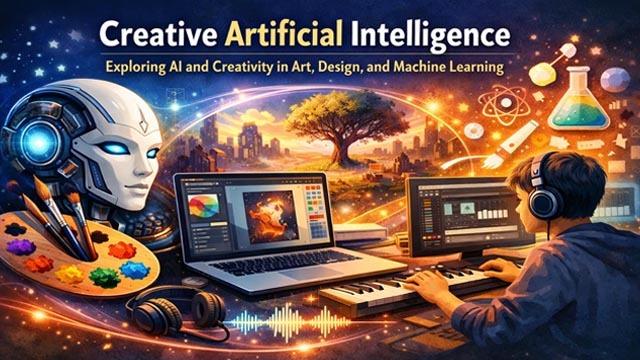
In today’s rapidly evolving digital world, children are growing up surrounded by technologies that were unimaginable just a decade ago. From smart devices to online learning platforms, technology has become a natural part of education and daily life. Among these advancements, creative artificial intelligence is emerging as one of the most fascinating developments shaping how students learn and express themselves.
Artificial intelligence is no longer limited to performing calculations or answering questions. Today, it can generate paintings, compose music, suggest designs, and even help students explore ideas for projects. These developments have sparked a global conversation about AI and creativity and whether machines can truly participate in the creative process.
For parents, this raises an important question: Can artificial intelligence really be creative? More importantly, what does the growing impact of artificial intelligence mean for children’s imagination, learning, and future skills?
As the famous scientist Albert Einstein once said:
“Creativity is intelligence having fun.”
In many ways, AI tools are helping students experience this idea by allowing them to experiment, explore, and create in new ways.
Understanding AI and Creativity
When we talk about AI and creativity, we are referring to computer systems that can produce creative outputs such as images, music, stories, or design concepts. These systems rely on a technology called machine learning, which allows computers to analyze large amounts of information and recognize patterns.
For example, an AI program may study thousands of paintings created by artists around the world. By analysing colours, styles, and composition techniques, it learns how different artistic elements work together. Using this knowledge, the system can generate new images. This is how artificial intelligence art is created.
The technology behind this process is machine learning, which enables computers to improve their performance as they analyse more examples. Over time, the system becomes better at producing creative outputs that resemble artistic styles or musical patterns.
However, it is important to remember that AI does not experience emotions or feel inspiration the way humans do. It learns from patterns rather than feelings.
As the artist Pablo Picasso famously said:
“Every child is an artist. The problem is how to remain an artist once we grow up.”
Interestingly, creative artificial intelligence can help children keep exploring their artistic side by giving them new tools to experiment with ideas.
Artificial Intelligence in Art
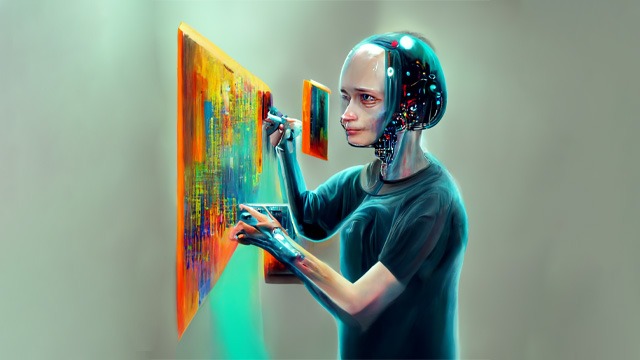
One of the most visible examples of AI and creativity is artificial intelligence art. Around the world, artists and students are using AI-powered tools to create digital paintings, illustrations, and visual concepts.
These tools allow students to describe an idea and instantly generate images that match their imagination. For example, a student might type “a jungle made of glowing plants” or “a futuristic school in space,” and the AI can create several visual interpretations.
Rather than replacing artists, creative artificial intelligence works best as a creative partner. Students can use it to brainstorm ideas, explore different artistic styles, or visualize concepts quickly.
This also helps students understand the growing impact of artificial intelligence in industries such as animation, digital media, advertising, and game design.
As the famous painter Vincent van Gogh once said:
“I dream my painting, and then I paint my dream.”
Today, tools used for artificial intelligence art allow students to quickly transform their dreams and ideas into visual forms.
Design with AI
Another exciting area is design with AI. Designers and students alike are discovering how AI tools can help generate layouts, posters, logos, and visual concepts.
Through machine learning, AI design tools analyse thousands of design examples and suggest creative combinations of shapes, colours, and fonts. This allows students to experiment with many design possibilities in a short time.
Using design with AI, students can:
- Create posters for school events
- Design covers for school magazines
- Experiment with logo ideas for projects
- Learn visual storytelling through layouts
For example, when students work on a presentation or project display, design with AI can help them visualize their ideas more clearly.
This encourages creativity and experimentation while also helping students understand the impact of artificial intelligence in real-world creative industries such as marketing, product design, and user experience design.
As the well-known designer Charles Eames once said:
“Design is a plan for arranging elements in such a way as best to accomplish a particular purpose.”
AI tools simply make it easier for students to explore many ways of arranging those elements.
Music and AI
AI is also changing how music can be explored and created. Through machine learning, AI tools can analyze thousands of songs to understand patterns in rhythm, melody, and harmony.
With this knowledge, AI can help generate musical ideas or assist students who are learning about composition.
Students exploring AI and creativity in music can use AI tools to:
- Create simple melodies for projects
- Generate background music for videos or presentations
- Experiment with different musical styles
- Understand rhythm and musical patterns
While AI can suggest melodies, the emotional storytelling of music still comes from human creativity.
As the legendary composer Ludwig van Beethoven once said:
“Music is the mediator between the spiritual and the sensual life.”
AI can assist with the technical aspects of music, but the deeper meaning and emotion remain uniquely human.
How AI Can Help with Science Projects
Beyond art and music, the impact of artificial intelligence can also be seen in how students approach science learning and school projects.
AI tools can help students:
- Research scientific topics quickly
- Generate ideas for experiments
- Create visual diagrams and models
- Organize project presentations
- Simulate scientific concepts
For example, students working on science fairs can use machine learning based tools to explore ideas such as:
- Climate change simulations
- Smart recycling systems
- AI-based plant growth monitoring
- Predicting weather patterns
- Robotics and automation experiments
Students can even use design with AI to create diagrams and posters explaining their scientific concepts.
As inventor Thomas Edison once said:
“The important thing is to not stop questioning. Curiosity has its own reason for existing.”
AI tools can help students ask more questions and explore more possibilities.
Encouraging Creativity in Everyday Activities
AI does not need to be limited to classrooms or technology labs. Parents can encourage AI and creativity in everyday life by combining digital tools with simple daily activities.
Here are a few ways students can explore creativity at home:
1. AI-Assisted Drawing
Students can use artificial intelligence art tools to generate creative prompts such as “draw a city made of candy” or “imagine an underwater school.” They can then create their own drawings inspired by these ideas.
2. Storytelling and Illustration
Children can write short stories and use design with AI tools to generate illustrations for their characters and scenes.
3. Music Exploration
Students interested in music can experiment with machine learning music tools that generate beats or melodies. They can then add their own lyrics or instruments.
4. Creative Photo Projects
AI photo tools can help students experiment with color filters, artistic styles, and design effects to create digital art from everyday photographs.
5. Creative Challenges
Parents can encourage fun creativity challenges such as:
- Designing a dream playground
- Creating posters for environmental awareness
- Illustrating a science concept using artificial intelligence art
These activities allow children to explore creative artificial intelligence in ways that strengthen both imagination and digital skills.
The Impact of Artificial Intelligence on Learning
The impact of artificial intelligence on education is becoming increasingly visible. AI tools are helping students personalize learning, explore new ideas, and develop problem-solving abilities.
By understanding AI and creativity, students learn that technology can be a tool for innovation rather than just entertainment.
They also begin to understand how machine learning works and how AI systems make decisions. This knowledge encourages critical thinking and responsible technology use.
As author Ken Robinson, a well-known advocate for creativity in education, once said:
“Creativity is as important in education as literacy.”
Guiding Children in the Age of AI
While the possibilities of creative artificial intelligence are exciting, guidance from parents and educators remains essential. Children should understand that AI tools are meant to support their creativity, not replace their imagination.
Parents can support healthy learning by:
- Encouraging creative hobbies such as drawing, music, or storytelling
- Discussing how AI tools work
- Helping children think critically about AI-generated content
- Promoting ethical and responsible technology use
When students understand both the strengths and limitations of AI, they become thoughtful and responsible users of technology.
Looking Toward the Future
As technology continues to evolve, the relationship between creativity and AI will become even stronger. From artificial intelligence art to design with AI, students will encounter new tools that transform how ideas are explored and expressed.
Understanding the impact of artificial intelligence today will help prepare students for tomorrow’s world.
By learning about machine learning, experimenting with creative artificial intelligence, and exploring AI and creativity, students can build skills that combine imagination with technology.
Ultimately, creativity remains one of humanity’s greatest strengths. AI can assist and inspire, but curiosity, empathy, and imagination come from people.
(Explore More About AI Blogs)
(Know More About Chrysalis High School)
Written By – Swapna Paranjpe,
Secondary Teacher – Chrysalis High Marq
Frequently Asked Questions
Yes, artificial intelligence can generate creative outputs like art, music, and designs using machine learning. However, it relies on patterns and data rather than emotions or original human imagination.
AI and creativity work together by combining human ideas with machine learning capabilities. AI helps generate concepts, while humans add emotion, originality, and meaning to the creative process.
The impact of artificial intelligence on students includes enhanced creativity, faster learning, personalized education, and improved problem-solving skills through interactive tools.
Artificial intelligence art is created using machine learning models trained on thousands of images. These models learn artistic styles, colors, and patterns to generate new and unique artworks.
Students can use design with AI to create posters, presentations, logos, and visual concepts. AI tools help them experiment with layouts, colors, and designs quickly and creatively.
The consensus among experts is that AI will transform the industry rather than replace it. The impact of artificial intelligence is most felt in automating repetitive tasks. However, the emotional depth, cultural context, and “soul” of a project still require a human touch—meaning future designers will need to know how to work alongside AI.
Top CBSE & ICSE schools in Bangalore, such as Chrysalis High, are leading the way by incorporating technology into the curriculum. By encouraging students to explore design with AI for school projects and science fairs, these institutions ensure that students are not just consumers of technology, but creators who understand the future of innovation.