Come the 26th of July every year, we pause to remember the valour of our armed forces in the Kargil war of 1999. On this day, the Kargil Vijay Diwas is celebrated every year to commemorate the Kargil War heroes who made the ultimate sacrifice in the line of duty. But it is not just a day to remember the martyrs. This day is a day when we celebrate a valour in victory that transcended mere military strategisation. It has become a national touchstone to remember that India is a resilient and united nation.
What is important to note is that the Kargil War was not just a military conflict. It was the first war that was televised enough. It whipped up national sentiment to a point where the spirit of India engaged with a deep connect to the fate of the army and jawans who regained the glory of the nation at the cost of their lives. It is perhaps also the war from which the most soldiers and officers martyred are remembered and commemorated as numerous biopics have been made on the war and its heroes in the popular Bollywood industry. 527 soldiers and officers lost their lives to restore the territorial integrity of India, wrestling it back under tremendous physical and psychological challenges.
The Anatomy of a Crisis
The peaks of the Line of Control, or LoC, which are defended by the armed forces are snowed in during the harsh winters. It was the practice to vacate smaller border posts at this time by armed forces of both sides. In the winter of 1998-99, in light of the improved ties between the two nations, and also general practice, Indian forces had moved into lower heights during the winter, leaving these border posts
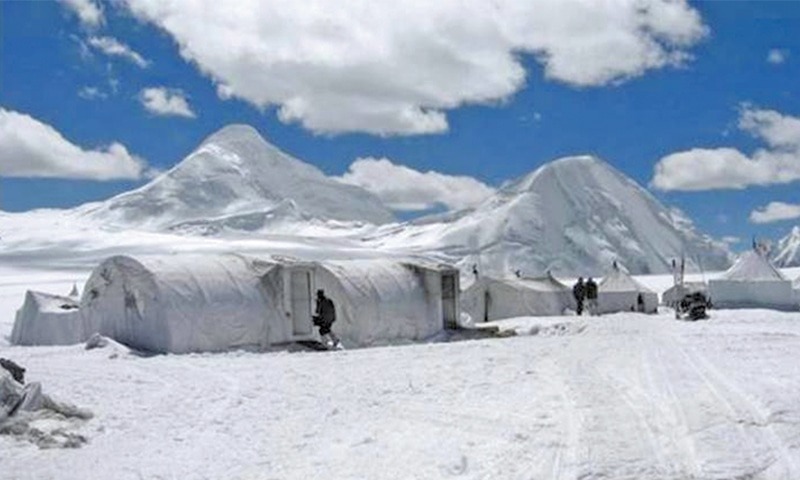
The conflict began when Pakistani forces, in a calculated breach of the Line of Control (LoC), occupied strategic heights in the Kargil district during this time. By May 1999, the extent of the infiltration became clear: the intruders had occupied positions as high as 18,000 feet, aiming to sever the Srinagar-Leh highway—a vital artery for India’s presence in Ladakh and the Siachen Glacier. The Siachen Glacier is the last frontier of Army defence and the forces there need regular supplies of ration and supplies to brave the harsh weather. This triggered the counter offensive by our armed forces to reclaim our territories and keep the supply lines live.
In conjunction with the Indian Air Force, who supported the ground military operations with air support through Operation Safed Sagar, the soldiers and officers of the Indian Army showed enormous grit, determination and spirit as they reclaimed India’s wrongfully occupied territory.
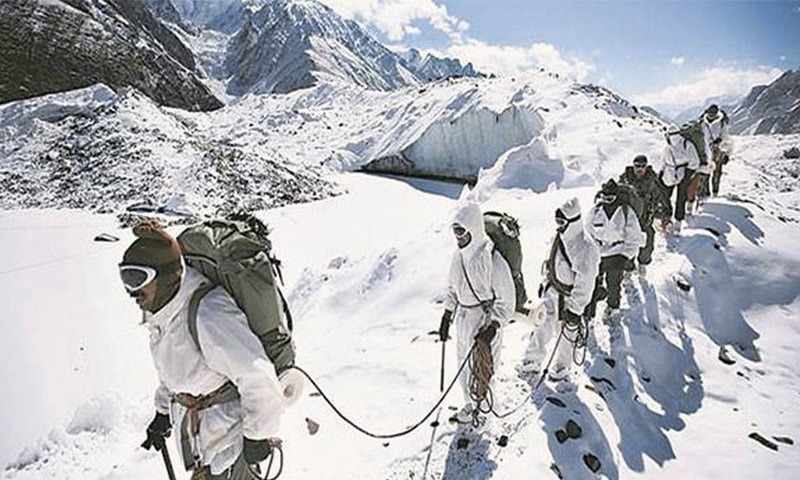
What followed was one of the most difficult high-altitude wars in human history. Battles for peaks like Tololing, Point 5140, and Tiger Hill became synonymous with unimaginable grit. As soldiers ascended near-vertical slopes under heavy enemy fire, they redefined the limits of human endurance.
The Human Face of Heroism- Kargil Bravehearts
527 brave men and women laid down their lives in Kargil War. They are hailed as heroes and the nation has awarded them with their place in the Tyag Chakra at the National War memorial. But they are more than a list of names, with their rank and unit names trailing behind.
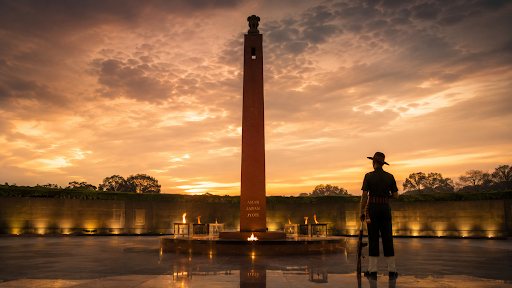
While the stalwarts have earned posthumous medals, does the sacrifice of these bravehearts only stop with their personal one? Who were these bravehearts? Let us meet them!
Captain Vikram Batra:
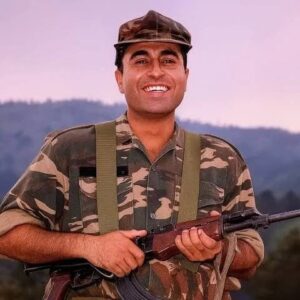
Captain Vikram Batra (1974–1999) was an Indian Army officer who received the Param Vir Chakra for serving ‘above and beyond the call of duty’ during the 1999 Kargil War. Known as “Sher Shah,” he became representative of Indian valor through his extraordinary leadership on the battlefield. He recaptured Point 5140 from enemy forces in a daring daylight operation. Subsequently, as he was in another operation to recapture Point 4875, Batra spotted a fellow soldier lying wounded in the line of heavy enemy fire. Disregarding his own safety, he charged forward to evacuate his comrade. While moving the injured soldier to safety, Captain Batra was struck by enemy fire. His life remains an enduring symbol of courage, selflessness, and the indomitable spirit of the Indian soldier. His famous words”Yeh dil maange more!”*—captured the indomitable spirit of a soldier who found joy even in the face of death.
Lieutenant Manoj Kumar Pandey:
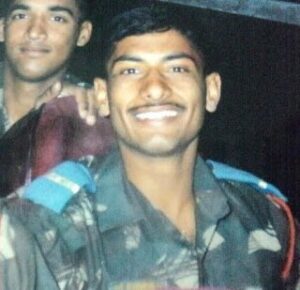
Lieutenant Manoj Kumar Pandey(1975–1999) was another officer who was posthumously awarded the Param Vir Chakra for his exceptional courage during the Battle of Khalubar in the Kargil War. He led his men into direct assault and single handedly destroyed four enemy bunkers, losing his life as he was injured while continuing into the fifth bunker. His famous words, “If death strikes before I prove my blood, I swear I’ll kill death” evidence his deep abiding love for his nation.
Major Rajesh Singh Adhikari:
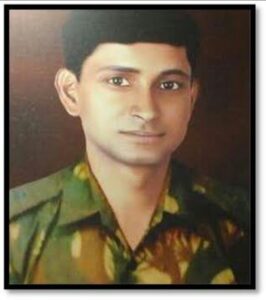
Major Rajesh Singh Adhikari (1970–1999) was an officer awarded the Maha Vir Chakra for his bravery during the recapture of the Tololing feature, a heavily fortified enemy position, in the Kargil War. He led his men, climbing steep snow covered slopes and coming under direct enemy fire, taking many bullet hits on his person.He personally engaged the enemy in close-quarters combat, silencing two bunkers and forcing the intruders into a retreat. His successful mission paved the way for the eventual Indian victory in the sector. His sacrifice serves as a profound reminder of the grit required to reclaim the frozen heights of the Himalayas, and he remains a revered hero of the Indian Army whose legacy of duty continues to inspire generations of soldiers.
Captain Anuj Nayyar:
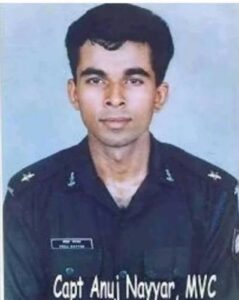
Captain Anuj Nayyar (1975–1999) was an officer of the 17 Jat Regiment who was posthumously awarded the Maha Vir Chakra for his heroic leadership and determination during the recapture of Point 4875, (where Capt Vikram Batra also succumbed), in the Mushkoh Valley sector.
The capture of Point 4875 was a turning point that secured the safety of the critical Srinagar-Leh highway.
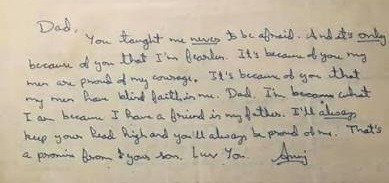
Captain Nayyar is remembered for his immense physical and moral courage.His letter home to his father is a steady testament of the importance he placed on bravery, a trait that he embodied to the end.
Grenadier Yogendra Singh Yadav:
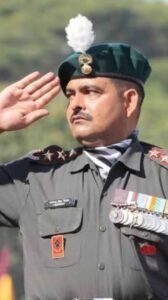
Grenadier Yogendra Singh Yadav (born 1980) is an Indian Army soldier who was awarded the Param Vir Chakra, India’s highest military decoration, for his extraordinary heroism during the Kargil War. He is one of the few soldiers to have received this honor while still in service.
In the historic battle for Tiger Hill in July 1999, he and his platoon were to capture three strategic bunkers for which he volunteered to climb the vertical, ice-covered cliff under the cover of darkness while being subjected to intense machine-gun fire from the enemy.
Despite being riddled with bullets and suffering multiple injuries, Grenadier Yadav displayed superhuman resolve, and nuetralised the bunker from where open fire was being rained on his fellow soldiers, effectively clearing the path for the Indian Army to secure the heights.
His survival against all odds—having been shot 15 times and sustaining multiple fractures—became a legend within the military.
Captain Haneef Uddin:
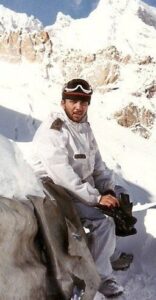
Captain Haneef Uddin (1974–1999) was an officer of the Indian Army, posthumously awarded the Vir Chakra for his supreme sacrifice during the Kargil War. Captain Haneef Uddin was a remarkable individual—a talented musician, a computer enthusiast, and a gifted student from Delhi. He was tasked with a high-risk mission to identify enemy positions along the treacherous heights of the Karchan Glacier at Point 5590. On the night of June 6–7, 1999, he led a patrol of 13 men up a razor-sharp mountain ridge in sub-zero temperatures.
At the last stage, they were spotted. Captain Haneef Uddin acted with profound selflessness. He took a tactical position and kept firing at the enemy to pin them down, creating a window of time for his team to move to safety.
His mother, Hema Aziz, a woman of immense strength, famously remarked when informed of the delay in recovering his body: “I wouldn’t want a son of another mother to die to extricate the body of my dead son.” Today, the sector where he fought is officially named the Haneef Sub-Sector in his honor.
Squadron Leader Ajay Ahuja:
Squadron Leader Ajay Ahuja (1963–1999), a decorated Indian Air Force pilot, was awarded a Vir Chakra for his supreme sacrifice during the 1999 Kargil War. He was not killeed in battle but in captivity with the enemy who subjected him to horrific tortures in violation of Geneva Conventions.
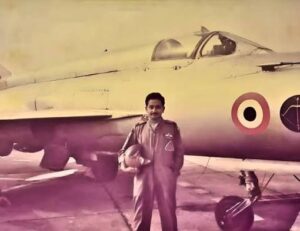
During Operation Safed Sagar, he diverted his reconnaissance mission to locate a fellow pilot, Flight Lieutenant K. Nachiketa, who had ejected over hostile territory. Despite the severe risk of enemy missiles, Ahuja persistently orbited the zone to transmit rescue coordinates.His MiG-21MF was eventually downed by a Stinger missile; after ejecting, he was captured.
Women also gave their selfless service during this war. Some of the leading names of women in the Kargil war are:
Flight Lieutenant Gunjan Saxena:
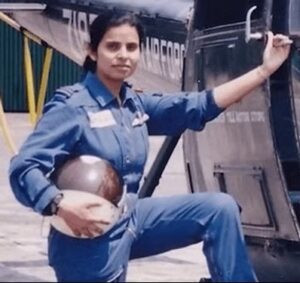
Flight Lieutenant Gunjan Saxena, a 1999 Kargil War veteran, is the first woman to fly in an Indian combat zone. She piloted Cheetah helicopters through extreme altitudes to evacuate wounded soldiers, conduct reconnaissance, and deliver supplies under heavy enemy fire. Her stoic resilience—including surviving a near-miss missile strike—shattered gender barriers in the Indian Armed Forces, proving that courage and skill are gender-blind and paving the way for future generations of women in uniform.
Flight Lieutenant Sreevidya Rajan:
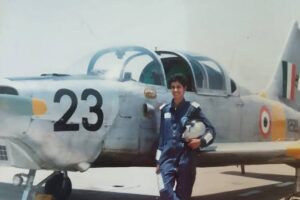
Flight Lieutenant Sreevidya Rajan is another pioneering Kargil War veteran who, alongside Gunjan Saxena, became one of the first women to fly in an Indian combat zone. She too operated Cheetah helicopters from Srinagar, conducting perilous missions involving casualty evacuation, reconnaissance, and supply drops at extreme Himalayan altitudes. Despite constant enemy fire, her precision and bravery shattered long-standing gender barriers, proving women’s indispensable role in the Indian Air Force and establishing a lasting legacy of courage.
Captain Ruchi Sharma:
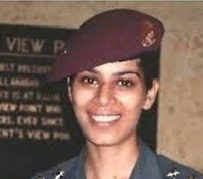
Captain Ruchi Sharma is the first woman operational paratrooper. By earning her wings in 1999—the same year as the Kargil War—she shattered traditional barriers and proved that elite airborne operations are not restricted by gender. Her success at the Paratrooper Training School in Agra marked a watershed moment for integration in the Armed Forces, paving the way for future women to join combat-support units and Special Forces. A symbol of silent grit and discipline, Captain Sharma remains a powerful inspiration for an increasingly inclusive and meritocratic Indian Army.
Major Dr. Prachi Garg:
Major Dr. Prachi Garg is a distinguished Army Medical Corps officer, recognized for providing critical trauma care in the world’s most challenging terrains, including the Siachen Glacier. Expertly managing emergency stabilization under extreme conditions where evacuation is often delayed, she embodies the frontline dedication of the Army Medical Corps. Beyond her surgical expertise, Major Dr. Garg represents the essential backbone of military support, ensuring every soldier has a fighting chance at survival and upholding the ethos of “Service Before Self.”
Captain Yashica Hatwal Tyagi:
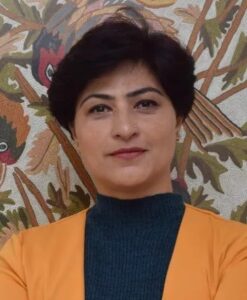
Captain Yashica Hatwal Tyagi is a decorated Indian Army veteran who provided essential logistical support on the frontlines during the 1999 Kargil War. Her exceptional management of vital supply chains under intense conflict conditions was crucial to the mission’s success. Today, she is a respected motivational speaker and advocate, bridging the gap between the military and civilians by sharing the realities of service and the legacy of Kargil’s martyrs. Her career remains a testament to the duty, resilience, and intellectual rigor that define a committed soldier.
Major Priya Jhingan:
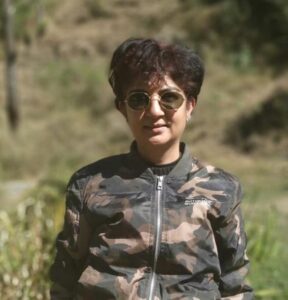
Major Priya Jhingan is the first woman to join the Indian Army, graduating from the Officers Training Academy in 1998 after successfully advocating for women’s inclusion through letters to the Chief of Army Staff. Serving ten years in the Judge Advocate General (JAG) department, she shattered gender barriers in a previously all-male institution. Her trailblazing journey laid the essential foundation for the thousands of women now serving in the Indian Armed Forces, cementing her legacy as an enduring icon of determination and equality in national service.
These human stories emphasise how we build our security as a nation on the foundations of their sacrifice and personal battles. The common thread in all these men and women is that they placed service to the nation before anything else, and they also had incredible bravery and compassion for their comrades. In the individualistic societal shifts of today, these stand as beacons of exemplar hope and citizenry.
A Turning Point for the Indian Nation
The Kargil War arrived at a time just a year after both India and Pakistan had declared themselves nuclear-armed states. India was forced to mature rapidly in three key areas:
Strategic Maturity: India’s decision to limit its response to the Indian side of the LoC, despite the immense provocation, earned it significant international diplomatic support. The war proved that India could handle localized, conventional aggression without escalating into a catastrophic nuclear confrontation.
Intelligence and Reform: The conflict exposed vulnerabilities in surveillance. The subsequent Kargil Review Committee was a watershed moment, leading to comprehensive reforms in national security, including the modernization of the intelligence architecture and the eventual creation of the Chief of Defence Staff (CDS) office.
The Power of Information: Kargil was India’s first “televised war.” For the first time, citizens watched the gritty, heroic footage of the frontlines. This media engagement fostered an unprecedented sense of national unity, bridging the gap between the civilian population and the men in olive green.
Lessons for the Incumbent Generation
For our children in Chrysalis High, and all school children, and the youth of today, Kargil Vijay Diwas should be more than a chapter in a history textbook. It is a classroom of character.
The heroes of Kargil offer three profound lessons that transcend the battlefield:
1. The Priority of the “We” over the “I”
2. Resilience in the Face of the “Impossible”
3. Intellectual Vigilance
As years turn into decades, the immediacy of the conflict fades, yet the significance of Kargil Vijay Diwas only grows. We commemorate this day to acknowledge the Debt of Gratitude- it is an act of renewing our pledge to maintain the unity that these men died to protect. For the ones who never returned to their homes and families, so that we may have peace and national pride, and to carry the legacy of that freedom and national assertion forward through the future generations of citizens , we must remember, and honour this day- Kargil Vijay Diwas as a perennial reminder that the light of a nation is kept burning by those who are willing to stand in the dark, guarding the heights, so that we may live in the light.
(Explore More About Nation Related Blogs)
(Know More About Chrysalis High School)
Written By – Amrita Paul,
School Coordinator – Chrysalis High
Frequently Asked Questions:
Kargil Vijay Diwas is observed every year on 26 July to commemorate India’s victory in the 1999 Kargil War. It honours the courage and sacrifice of the Indian Armed Forces who successfully reclaimed strategic positions during Operation Vijay.
Operation Vijay was the codename given to the Indian Army’s counter-offensive operation during the 1999 Kargil War. Launched in May 1999 after detecting foreign infiltration along the Line of Control (LoC) in Ladakh, the mission aimed to reclaim strategic mountain peaks—such as Tiger Hill, Tololing, and Point 5140—and protect the critical Srinagar-Leh highway.
Official records show that 527 Indian soldiers and officers sacrificed their lives during the Kargil War. Hundreds of others were injured while fighting under extreme high-altitude terrain and sub-zero weather conditions.
Four brave soldiers were awarded India’s highest military decoration, the Param Vir Chakra, for their extraordinary heroism during Operation Vijay: Captain Vikram Batra (Posthumous) Lieutenant Manoj Kumar Pandey (Posthumous) Grenadier Yogendra Singh Yadav Rifleman Sanjay Kumar
Yes. Flight Lieutenant Gunjan Saxena and Flight Lieutenant Sreevidya Rajan became the first female Indian Air Force pilots to fly in an active combat zone during the Kargil conflict. They flew Cheetah helicopters for casualty evacuation, reconnaissance, and supply operations near the frontlines under direct enemy threat.