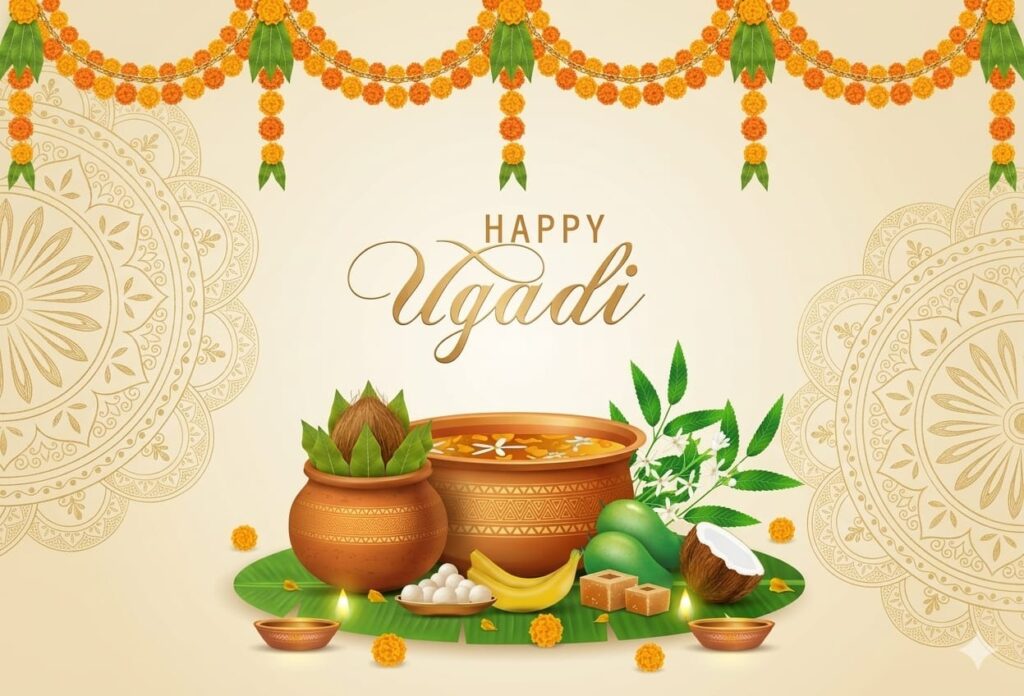
“Spring is far more than just a season; it is the rebirth of the spirit.” Ugadi beautifully reflects this idea, celebrating the arrival of spring as a time of renewal, hope, and fresh beginnings. As nature awakens with blooming flowers, fresh leaves, and vibrant colors, Ugadi symbolizes a similar renewal in human life—encouraging people to embrace change, leave behind the past, and welcome the new year with optimism and positivity. The importance of Ugadi is quite notable as it marks the Hindu calendar New Year for people living between the Kaveri River and the Vindhyas, who follow the South Indian lunar calendar. The festival symbolizes the beginning of a new year filled with hope, prosperity, and new opportunities.
Ugadi, also known as Yugadi, is one of the most important festivals celebrated in the southern Indian states of Andhra Pradesh, Telangana, and Karnataka. The word Ugadi comes from the Sanskrit terms “Yuga,” meaning age or era, and “Adi,” meaning beginning, together signifying “the beginning of a new age.” Celebrated on the first day of the Chaitra month, usually in March or April, the festival coincides with the arrival of spring and the start of a fresh annual cycle in nature.
Deeply rooted in Hindu tradition, Ugadi is believed to be the day when Brahma began the creation of the universe, making it a symbolic beginning of time itself. Owing to this belief, the day represents renewal, creation, and transformation and many people consider it an auspicious time to start new ventures, make important decisions, or set personal goals for the coming year. Beyond its religious significance, Ugadi reflects the philosophy of life in Hindu culture—embracing every emotion and experience as part of a meaningful journey, much like the renewal seen in nature as trees bloom, flowers blossom, and life begins anew.
Preparations for the Festival
Ugadi festival celebrations begin before the beginning of the Chaitra month, when families prepare for the festival by thoroughly cleaning and whitewashing their homes to welcome the New Year with positivity and purity. Temples and the prayer rooms within houses are beautifully decorated with fresh jasmine flowers and mango leaves, creating a festive and sacred atmosphere. Homes are also adorned with colorful rangoli patterns which are carefully drawn with colored powders at the entrance of houses.
Doorways are decorated with fresh mango leaf garlands, known as torans, which are believed to bring prosperity, good fortune and positive energy into the home for the coming year. The tradition of tying mango leaves to doorways is also connected to a popular legend. According to the story, Kartikeya and Ganesha, the sons of Shiva and Parvati, were especially fond of mangoes. It is believed that Kartikeya encouraged people to hang fresh green mango leaves at their doorways as a symbol of prosperity, good harvests and overall well-being. For many farmers, these fresh mango leaves also represent the hope for abundant crops and agricultural prosperity in the year ahead.
Shopping for new clothes is also an important tradition. Wearing new garments on Ugadi represents renewal and the start of a fresh phase of life. Traditionally, men dress in a white or off-white linen shirt paired with a cotton lungi or a long loincloth, often decorated with elegant gold zari borders. Women celebrate the occasion by wearing rich and opulent attire, such as brocade sarees like Bangalore silk or Kanjivaram, usually in vibrant colors with thick gold zari borders. To complete their festive look, women adorn their hair with fragrant jasmine flowers and accessorize with traditional gold jewelry, including necklaces, earrings and bangles crafted in classic designs.
Rituals and Traditions of Ugadi
Ugadi festival celebrations begin with family members waking up before dawn and begin the day with a traditional ritual bath. The idols of the gods and goddesses in the home are also ceremonially bathed with oil, followed by prayers and offerings of neem flowers, raw mango, and tamarind.
In many households, the elderly women apply oil and vermilion (kumkum) on the foreheads of younger family members as a blessing. After this ritual, all members of the family look at their reflection in a vessel filled with molten ghee, which is considered a symbolic and auspicious practice for welcoming the New Year.
Although Ugadi is celebrated with similar enthusiasm across regions, certain rituals and traditions vary from state to state. In Andhra Pradesh, people begin the day by applying sesame oil to their body and head before taking a ritual bath, Abhyanga Snanam, a practice believed to purify the body and mind. After this sacred bath, families visit temples to seek the blessings of the divine and pray for prosperity in the coming year.
In Karnataka, the celebrations include unique customs that highlight local traditions. Devotees prepare fragrant garlands made of jasmine flowers and offer them to the deities during prayers. Another important ritual is placing a coconut on a decorated kalash near the entrance of the home, symbolizing the welcoming of peace, prosperity, and positive energy into the household for the new year.
The Ugadi Panchangam is another important ritual of the festival of Ugadi and involves the ceremonial reading of the Panchangam, the new Hindu lunar calendar for the year. On this day, the Panchangam is read aloud for the first time, usually by temple priests or respected elders. People often gather at temples or community centers to listen to these predictions in a traditional and devotional setting. The forecasts typically cover various aspects of life, including rainfall, agricultural yields, political developments, health, economic trends, and personal fortunes, helping individuals prepare for the year ahead. In many households, this ritual follows the consumption of Bevu-Bella / Ugadi Pachadi, a symbolic dish representing the different emotions of life, and precedes other customs such as the ritual oil bath and wearing new clothes. It is believed that those who listen to or read the Panchangam receive guidance, wisdom, and blessings for the coming year. As a gesture of gratitude and respect, the priest or the person who reads the Panchangam is traditionally offered gifts, often in the form of new clothes.
The Symbolic Dish: Bevu-Bella / Ugadi Pachadi
A central part of the Ugadi celebration is the preparation of a unique dish called Bevu-Bella, in Karnataka and Ugadi Pachadi, in Andhra Pradesh and Telangana.
This dish perfectly represents the philosophy of the festival as it combines six different tastes: sweet, sour, salty, bitter, spicy, and tangy. Each taste comes from a specific ingredient and symbolizes different emotions or experiences in life.
Bevu Bella is a traditional and symbolic dish prepared during the Kannada New Year festival of Ugadi. The name comes from the Kannada words bevu (neem) and bella (jaggery), which together represent the mixture of life’s experiences—both bitter and sweet. The dish reflects the philosophy that life is made up of different emotions and situations, and each should be accepted with balance, gratitude, and resilience.
In addition to neem leaves and jaggery, Bevu Bella often includes ingredients such as raw mango, tamarind, chili, roasted lentils, and sometimes peanuts or dried coconut. These ingredients symbolize the six distinct flavors of life—bitter, sweet, sour, tangy, spicy, and salty—representing the varied emotions people experience throughout life. The preparation can be served either as a coarse, dry mixture or in a liquid, soup-like form known as Panaka. As part of the tradition, a small portion of the dish is first offered to the deity as Naivedyam before being shared among family members and friends, symbolizing unity and the welcoming of the New Year.
Ugadi Pachadi is a traditional and symbolic dish prepared during the festival of Ugadi, especially among Telugu-speaking communities, and it is quite similar in meaning to Bevu Bella prepared in Karnataka. The dish combines six different tastes—sweet, sour, bitter, tangy, salty, and spicy—which represent the various emotions and experiences of life. Key ingredients include neem flowers, raw mango, jaggery, tamarind, chili, and salt, each symbolizing a particular feeling. The bitterness of neem flowers represents sadness or challenges, while jaggery signifies happiness and joy. Raw mango symbolizes surprise and new experiences, tamarind represents moments of aversion or difficulty, green chili or pepper stands for anger, and salt symbolizes fear.
The dish teaches an important life lesson: life is a mixture of many emotions, and every experience—pleasant or difficult—plays a role in shaping our journey.
The Festive Feast
Traditionally, Ugadi meals consists of Holige, holige Saaru, kosambarii, green beans palya, mango chitranna, a variety of payasa, papads, bhajjis/pakodas, rava ladoo, kesari bath, medhu vada, pickles along with white rice and fresh yogurt.
- Holige / Obbattu: The most iconic dish, a stuffed sweet flatbread made with chana dal, jaggery, and coconut, served hot with ghee.
- Mavinakayi (mango) Chitranna: Tangy rice mixed with raw mango, curry leaves, and peanuts.
- Kosambari: A refreshing salad made with soaked moong dal, cucumber, and coconut.
- Obbattu Saaru / Holige Saaru: A flavorful, spicy soup prepared using the leftover water from cooking the dal for the holige.
- Green beans palya is a quick South Indian stir-fry made with finely chopped green beans, tempered with mustard seeds, urad dal, curry leaves, and green chilies, then finished with fresh grated coconut
- Mango-based dishes: Raw mango pickles and chutneys are common.
- Gasagase Payasa is a rich and traditional dessert from Karnataka often prepared during Ugadi. It is made with poppy seeds, grated coconut, jaggery, and cardamom, with rice sometimes added for thickness and roasted cashews in ghee used as a garnish.
- Hesaru Bele Payasa is a comforting and protein-rich dessert commonly prepared during festive occasions and often offered as prasadam. It is made with yellow moong dal, coconut milk, jaggery, cardamom, and ghee, giving it a rich flavor and nourishing quality.
- Rava ladoo is a popular Indian sweet made by roasting fine semolina (rava/sooji) in ghee, then mixing it with powdered sugar, coconut, nuts, and cardamon, and binding it with warm milk.
- Kesari bath is a South Indian dessert. The classic ingredients used for its preparation are semolina, sugar, ghee (usually), water, and milk.
Before the family begins their festive meal, the dishes are first offered to the deities as a gesture of gratitude and devotion. This offering, known as naivedyam, symbolizes seeking divine blessings for prosperity and well-being in the coming year. The meal is traditionally served on fresh banana leaves, a practice that reflects purity, abundance, and harmony with nature. Sharing this sacred meal together marks an auspicious beginning to the New Year and represents hope, renewal, and a fresh start for the entire family.
Cultural Importance of Ugadi
The festival of Ugadi holds deep cultural significance in southern India, particularly in the states of Andhra Pradesh, Telangana, and Karnataka. It is widely celebrated as a symbol of new beginnings, cultural heritage, and the welcoming of the Hindu New Year with joy and optimism.
Symbol of New Beginnings
Ugadi symbolizes the start of a new year according to the Hindu lunar calendar. It encourages people to reflect on the past year and welcome the future with optimism and determination. Just as nature renews itself during the spring season, the festival inspires individuals to embrace fresh opportunities and personal growth.
Preservation of Cultural Traditions
Ugadi plays an important role in preserving cultural heritage and traditional practices. Customs such as decorating homes with rangoli, preparing symbolic dishes like Ugadi Pachadi and Bevu Bella, and listening to the Panchangam help pass cultural values and traditions from one generation to the next.
Strengthening Family and Community Bonds
The festival brings families and communities together. Relatives gather to share festive meals, exchange greetings and participate in rituals and prayers. These celebrations strengthen social relationships and create a sense of unity and belonging within the community.
Reflection of Life’s Philosophy
One of the unique aspects of Ugadi is the symbolic food prepared during the festival. Dishes like Bevu Bella / Ugadi Pachadi represent the different flavors of life—sweet, bitter, sour, spicy, and salty—reminding people that life includes both joyful and challenging experiences. This philosophy encourages acceptance, resilience and balance.
Celebration of Nature and Seasonal Change
Ugadi coincides with the arrival of spring, when nature begins to bloom with fresh leaves and flowers. The festival celebrates this natural renewal, highlighting the deep connection between human life and the rhythms of nature.
Cultural and Literary Celebrations
In many regions, Ugadi is also marked by cultural events, poetry recitations (Ugadi Kavi Sammelanam) and traditional performances that celebrate language, art and literature. These events help promote regional identity and pride in cultural heritage.
In essence, the cultural importance of Ugadi lies in its ability to unite spirituality, tradition, family values, and the celebration of nature. The festival serves as a reminder that every new year offers a chance for renewal, growth, and the strengthening of cultural bonds.
Regional Variations of the Festival
Although Ugadi is primarily celebrated in the southern states of India, similar New Year festivals are observed in other parts of the country under different names, each reflecting regional traditions and cultural expressions. In the state of Maharashtra, the festival is celebrated as Gudi Padwa, where families hoist a decorated flag known as a “Gudi” outside their homes. The Gudi, adorned with bright cloth, neem leaves, and a copper or silver pot, symbolizes victory, prosperity, and the triumph of good over evil.
Similarly, the Sindhi community celebrates their New Year as Cheti Chand, which commemorates the birth of their patron saint, Jhulelal. This festival is marked by prayers, processions, devotional songs, and community gatherings that honor their spiritual heritage and traditions.
While the names, rituals, and cultural practices may vary across regions, the underlying spirit remains the same. Each of these festivals celebrates the arrival of a new year with hope, gratitude, positivity, and the promise of fresh beginnings, bringing families and communities together in joyful celebration.
The Deeper Meaning of Ugadi
At its heart, Ugadi serves as a powerful reminder of life’s cyclical nature. Just as seasons change and nature renews itself each year, the festival encourages people to embrace change, growth and new beginnings with a positive spirit. Ugadi symbolizes the continuous cycle of renewal in both nature and human life, inspiring individuals to welcome the New Year with hope and enthusiasm.
The festival also emphasizes gratitude for the past, acceptance of life’s ups and downs, and optimism for the future. Through meaningful traditions, spiritual rituals, symbolic foods and joyful community gatherings, Ugadi reflects the deeper values of Indian culture—harmony, resilience, and unity.
Ultimately, Ugadi teaches that the arrival of a new year is more than just a change in the calendar; it is an opportunity to reflect on past experiences, learn valuable lessons, and move forward with renewed hope, determination, and a fresh perspective on life.
(Explore More About Festival Blogs)
(Know More About Chrysalis High)
Written By – Ameeta Bhaskar,
Secondary Teacher – Chrysalis High Horamavu
Frequently Asked Questions
Ugadi festival celebration marks the beginning of the Hindu calendar New Year in several South Indian states. The festival is celebrated with rituals such as decorating homes with mango leaves, preparing Ugadi Pachadi or Bevu Bella, listening to the Ugadi Panchangam, and sharing festive meals with family and friends.
Ugadi is considered the Hindu New Year because it marks the first day of the Chaitra month in the Hindu lunar calendar. According to tradition, it is believed to be the day when Lord Brahma began the creation of the universe, making it a symbolic start of a new annual cycle.
The Ugadi Panchangam is the traditional reading of the Hindu lunar calendar for the new year. On Ugadi day, priests or elders read predictions related to rainfall, agriculture, economy, and general prosperity for the coming year, helping people prepare for the months ahead.
The Ugadi festival is celebrated mainly in the southern Indian states of Karnataka, Andhra Pradesh, and Telangana. In Karnataka, the festival is widely known as the beginning of the Kannada New Year, while similar celebrations are observed as Gudi Padwa in Maharashtra and Cheti Chand among the Sindhi community.
Popular Ugadi dishes include holige (obbattu), mango chitranna, kosambari, green beans palya, payasa, kesari bath, medhu vada, and rava ladoo. These dishes are first offered to the deities as naivedyam before the family meal.
Leading educational institutions, such as Chrysalis High, which is consistently ranked among the top 10 CBSE schools in Bangalore, emphasize holistic development by celebrating cultural festivals. These schools often organize special assemblies where students learn about the hindu calendar new year, prepare symbolic dishes, and participate in traditional performances to stay connected to their heritage.
The ugadi festival in Karnataka is famous for the ritual of Bevu Bella, a mixture of neem and jaggery. Families also perform Abhyanga Snanam (sacred oil bath), decorate their homes with fresh mango leaf torans, and prepare special dishes like Obbattu (sweet flatbread) to welcome the year with joy.