India is a land where festivals are not only occasions for joy and celebration but also powerful mediums of learning. Each festival reflects the country’s deep connection with nature, seasons, and human values. Among these, the festival of Makar Sankranti holds a special place because it beautifully combines science, spirituality, culture, and moral education.
For students especially, Makar Sankranti is not just about flying kites or enjoying sweets—it is a festival that teaches important life lessons such as discipline, positivity, hard work, and respect for nature. As Makar Sankranti 2026 approaches, it is the perfect time to reflect on why this ancient festival continues to be so relevant for young minds today.
What Is the Makar Sankranti Festival?
Many students often ask, what is Makar Sankranti festival, and why is it celebrated across India with such enthusiasm?
Makar Sankranti marks the day when the Sun enters the zodiac sign Makara (Capricorn) and begins its northward journey, known as Uttarayan. Unlike most Indian festivals that follow the lunar calendar, Makar Sankranti is based on the solar calendar, making it one of the most scientifically significant festivals in India.
In Makar Sankranti 2026, the festival will be celebrated on 14 January, as it is every year. This transition of the Sun is believed to bring longer days, warmth, prosperity, and positive energy. Symbolically, it represents a movement from darkness to light, ignorance to knowledge, and despair to hope—an idea that strongly resonates with students and learners.
About Sankranti Festival: A Celebration of Nature and Knowledge
To truly understand the Sankranti festival, one must look at its close connection with nature and agriculture. Makar Sankranti is primarily a harvest festival, celebrated to express gratitude to the Sun, soil, water, and farmers for sustaining life.
Across India, the festival is known by different names:
- Pongal in Tamil Nadu
- Lohri in Punjab
- Uttarayan in Gujarat
- Magh Bihu in Assam
Despite regional variations, the core message remains the same—new beginnings, gratitude, and growth.
For students, this highlights the importance of respecting nature and understanding that human progress is deeply linked to environmental balance. The festival quietly teaches that learning and development should always go hand in hand with responsibility.
Celebration of Makar Sankranti Across India
The celebration of Makar Sankranti is vibrant, colorful, and full of cultural significance.
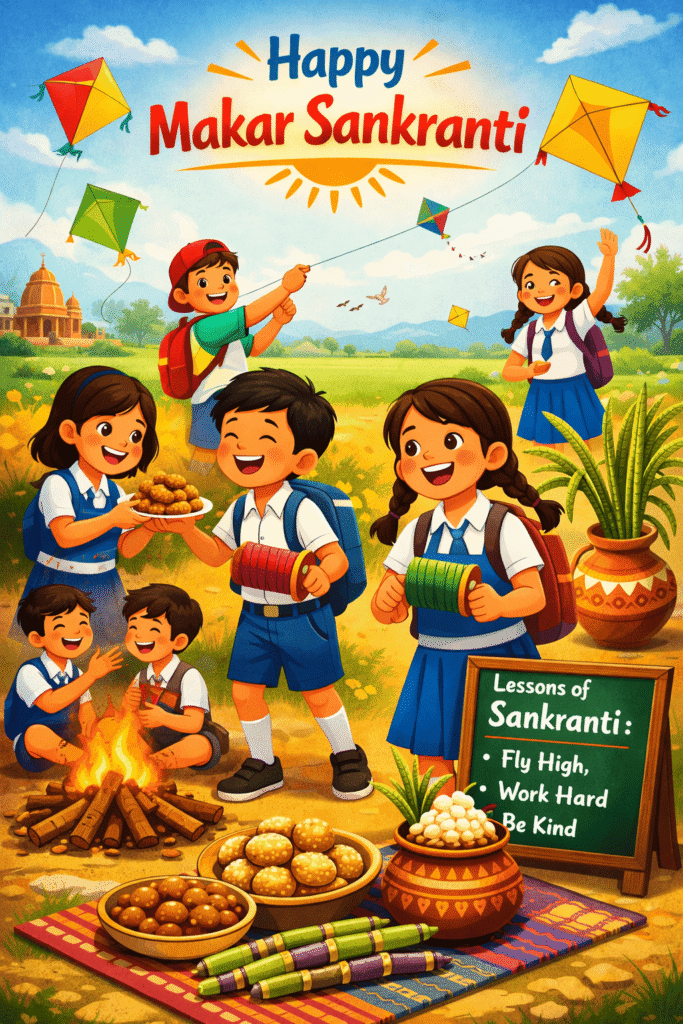
- Kite flying fills the skies, symbolizing freedom, ambition, and joy.
- Til (sesame) and jaggery sweets are exchanged to promote sweetness in relationships and speech.
- Traditional dishes are prepared using newly harvested grains.
- Bonfires, prayers, and community gatherings strengthen social bonds.
Each ritual has a deeper meaning. For students, participating in these traditions becomes an experiential way of learning values such as sharing, cooperation, and cultural pride.
Lesson 1: Embracing Change – A Message from the Sun
One of the most powerful lessons of the festival Makar Sankranti is the importance of accepting change. The Sun’s shift into Capricorn signifies transition and progress.Students constantly face changes—new academic years, subjects, teachers, expectations, and challenges. Makar Sankranti teaches that change is necessary for growth. Just as the Sun moves forward without hesitation, students too must learn to face new situations with confidence and optimism.
Lesson 2: Hard Work and Patience Lead to Success
As a harvest festival, Makar Sankranti celebrates the results of months of dedication by farmers. Crops grow slowly, requiring patience, care, and discipline.This is a valuable lesson for students living in a world of instant gratification. Academic success, skill development, and personal growth cannot be rushed. The festival reminds students that consistent effort and patience always bear fruit, just like a good harvest.
Lesson 3: Sankranti Special Message of Sweetness and Positivity
One of the most meaningful Sankranti special traditions is the exchange of tilgul sweets with the message:
“Tilgul ghya, god god bola” — “Accept this sweet and speak sweet words.”
Sesame seeds represent life’s challenges, while jaggery symbolizes sweetness and hope. Together, they teach students to remain positive even during difficult times.In school life, competition, stress, and peer pressure are common. Makar Sankranti encourages students to practice kind speech, emotional balance, and empathy, helping them build healthy relationships.
Lesson 4: Unity in Diversity
The way Makar Sankranti festival is celebrated across different regions of India reflects the country’s rich diversity. Yet, the essence of the festival remains the same everywhere.For students, this is a powerful lesson in unity in diversity. Classrooms today are multicultural spaces. Learning to respect different traditions, opinions, and lifestyles prepares students to become inclusive and tolerant global citizens.
Lesson 5: Kite Flying and the Art of Setting Goals
Kite flying is one of the most exciting parts of the celebration of Makar Sankranti, but it also carries symbolic meaning. A kite rises high only when it is balanced and guided by a strong thread.For students, the kite represents dreams and ambitions, while the thread symbolizes discipline, values, and guidance from teachers and parents. Makar Sankranti teaches students to dream big but stay grounded, reminding them that success requires both freedom and responsibility.
Lesson 6: Respect for Nature and Sustainability
The Sankranti festival story is incomplete without acknowledging its strong environmental message. By honoring the Sun and harvest, the festival teaches gratitude towards nature.
In today’s world of climate change and environmental challenges, students must understand the importance of sustainability. Makar Sankranti encourages eco-friendly habits such as conserving resources, reducing waste, and living in harmony with nature.
Lesson 7: Discipline, Health, and Balanced Living
Traditional Makar Sankranti practices emphasize early rising, cleanliness, prayer, and nutritious food. These customs highlight the importance of discipline and healthy living.
For students, maintaining a balanced routine is essential for academic success and mental well-being. The festival subtly reminds them that a healthy lifestyle supports better learning and focus.
Lesson 8: Sharing, Charity, and Social Responsibility
Sharing food and joy is an integral part of the festival Makar Sankranti. Helping the needy and celebrating together strengthens community bonds.
This teaches students that education is not just about personal achievement. True success lies in contributing positively to society, showing compassion, and helping others grow.
Why Makar Sankranti 2026 Is Especially Relevant for Students
As Makar Sankranti 2026 arrives in a fast-changing, technology-driven world, its lessons are more important than ever. Students today face academic pressure, digital distractions, and emotional stress.
Makar Sankranti reminds them to slow down, reflect, and realign with values such as perseverance, kindness, gratitude, and self-discipline. It bridges the gap between traditional wisdom and modern education, making learning meaningful beyond textbooks.
Conclusion: A Festival That Teaches for Life
Makar Sankranti is far more than a seasonal celebration. It is a festival of transformation, guiding students to move from ignorance to knowledge, fear to confidence, and selfishness to compassion.
By understanding the Makar Sankranti festival, participating in its rituals, and reflecting on its deeper meanings, students gain life lessons that shape their character and mindset. As the Sun begins its northward journey, Makar Sankranti inspires young learners to begin their own journey towards growth, wisdom, and responsible living.In this way, Makar Sankranti truly proves that it is more than a festival—it is a life lesson for students.
(Explore more about Festival blogs)
(Know more about Chrysalis High)
Written By – Ichini Sharmista Shyam,
Academic Coordinator – Chrysalis High Varthur
Frequently Asked Questions
Most Indian festivals follow the Lunar calendar (the phases of the moon), which causes their dates to shift every year. However, Makar Sankranti follows the Solar calendar. It marks the precise moment the Sun enters the zodiac sign of Capricorn (Makara). Because the solar cycle is consistent, the festival almost always falls on January 14th (and occasionally the 15th), serving as a bridge between ancient astronomy and modern calendars.
Beyond the fun and competition, kite flying has a traditional health benefit! After a long winter, people spend hours in the morning sun while flying kites. This allows the body to soak up Vitamin D and helps clear skin infections or “winter chills” caused by the cold. For students, it’s the perfect way to combine physical activity with natural sun therapy.
While the festival of Makar Sankranti is known for kite flying and sweets, it is actually about new beginnings, learning from nature, personal growth, and moving from ignorance to knowledge – making it a meaningful festival for young minds.
At Chrysalis High, the lessons of the Makar Sankranti festival – such as responsibility, respect for nature, emotional intelligence, and perseverance – are reflected in everyday learning through value-based education, celebrations, classroom discussions, and community activities that shape well-rounded individuals.
Kite flying during the celebration of Makar Sankranti symbolizes ambition and dreams. It teaches students that success comes from balance – dreaming big while staying grounded with discipline and guidance.