Human curiosity has always pushed us to explore the unknown, and space exploration is one of the greatest examples of this desire to learn and grow. Behind every successful space mission are individuals who display exceptional courage, discipline, and leadership. One such inspiring personality is Astronaut Sunita Williams, whose journey continues to motivate young scientists across the globe. Her life and leadership in space offer powerful lessons for today’s youth, especially those who aspire to build careers in science, technology, and exploration.
Sunita Williams: A Proud Indian Connection
Though born in the United States, Sunita Williams is Indian by heritage. Her father hails from Gujarat, India, and she has always expressed pride in her Indian roots. This connection makes her story especially meaningful for Indian students, proving that talent and determination can shine on a global stage regardless of origin.
Sunita Williams has visited India multiple times and acknowledged how her cultural values shaped her discipline, humility, and respect for teamwork. For young learners, knowing that Sunita Williams is Indian by origin creates a sense of belonging and belief that dreams of space are achievable.
Early Life and Journey into Space
Sunita Williams grew up with a love for adventure. She was not an instant topper or prodigy but worked steadily towards her goals. She joined the United States Navy and trained as a helicopter pilot, flying missions under challenging conditions.
Becoming an astronaut required years of intense physical and mental training. Despite setbacks and competition, she never gave up. Her selection by NASA in 1998 reflects persistence and resilience—key lessons for young scientists that success comes through preparation and patience.
Astro Sunita: A Leader Beyond Earth
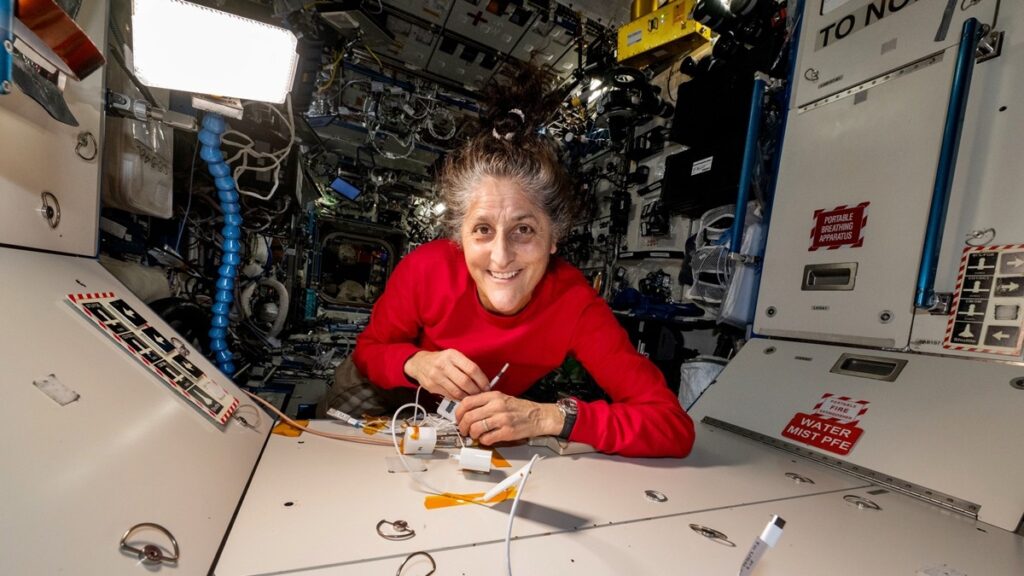
Fondly known as Astro Sunita, she is admired not only for scientific expertise but also for leadership. Life in space demands emotional strength, cooperation, and calm decision-making.
As Astro Sunita, she showed that leadership is not about authority but responsibility. Whether conducting experiments, repairing equipment, or supporting teammates, she led by example. Her emotional intelligence highlights that leadership in science requires both knowledge and attitude.
Life and Leadership on the International Space Station
One of the most remarkable chapters of Sunita William’s biography was her time aboard the International Space Station (ISS)—a symbol of global cooperation.
Sunita Williams spent over 300 days on the International Space Station, handling experiments, spacewalks, and technical repairs. Life aboard the International Space Station demands adaptability, precision, and constant learning. Her leadership was evident in teamwork, problem-solving, and handling unexpected challenges.This experience teaches young scientists that collaboration across nations leads to meaningful scientific progress.
Challenges Faced in Space
Life in space presents severe physical and mental challenges such as muscle loss, isolation, and long separation from family. Despite this, Astro Sunita remained focused and optimistic.
She even ran a marathon while aboard the International Space Station, proving that limitations exist only if we accept them. Her mental strength shows students that challenges are opportunities for growth and learning.
Leadership Lessons for Today’s Young Scientists
1. Perseverance Is Key
Failures and delays are part of every scientific journey. Sunita William’s success came through years of effort and training.
2. Teamwork Makes Science Stronger
Her work on the International Space Station shows that science thrives on collaboration and shared responsibility.
3. Stay Curious and Keep Learning
As Astro Sunita, she continuously learned new skills, showing that curiosity fuels innovation.
4. Leadership Means Responsibility
True leadership is guiding others with empathy and example, not command.
5. Cultural Pride with Global Vision
While Sunita Williams is Indian by origin, she worked with international teams, balancing cultural pride with global cooperation.
Inspiring the Next Generation
Sunita Williams is more than an astronaut—she is a symbol of hope. Her journey encourages students, especially girls, to pursue science and technology without fear. She proves that gender is not a barrier to excellence and leadership.
Educators use Astronaut Sunita William’s story to teach resilience, discipline, and curiosity. For young dreamers, Astro Sunita remains a guiding star.
Conclusion
Sunita William’s leadership in space reflects the true spirit of scientific exploration. Her journey—from her Indian roots to leading missions on the International Space Station—shows that determination, teamwork, and courage can take humanity beyond Earth’s limits.
For today’s young scientists, her life is a reminder that success comes from dedication and values. As we look toward a future driven by science and innovation, Sunita William’s leadership continues to inspire us to dream big and reach for the stars.
(Explore more about our blogs)
(Know more about Chrysalis High)
Written By – Rajeshwari R,
Academic Coordinator – Chrysalis High Varthur
Frequently Asked Questions
Sunita Williams is an Indian-origin NASA astronaut known for her long-duration space missions and leadership aboard the International Space Station. Her achievements make her one of the most inspiring figures in space exploration.
Although born in the US, Sunita Williams is Indian by heritage. Her father, Deepak Pandya, hails from Gujarat, India. She has frequently visited India to inspire students, often speaking about how her cultural roots instilled the discipline and humility required for her space missions.
Astronaut Sunita Williams spent more than 300 days in space across multiple missions, conducting experiments, performing spacewalks, and contributing to research on the International Space Station.
Yes. After an illustrious 27-year career, Astronaut Sunita Williams officially retired from NASA on December 27, 2025. She now spends her time as a global speaker, recently appearing as the guest of honor at the 2026 Kerala Literature Festival to mentor future scientists.
Sunita Williams proves that gender is not a barrier to success in science and space exploration. Her journey encourages young girls to pursue careers in STEM with confidence.
Schools like Chrysalis high best cbse schools in bangalore focus on experiential learning, critical thinking, and scientific curiosity, helping students develop the skills and confidence needed to pursue careers in space, technology, and innovation.