What the Nirmala Sitharaman Union Budget Means for Schools and Families
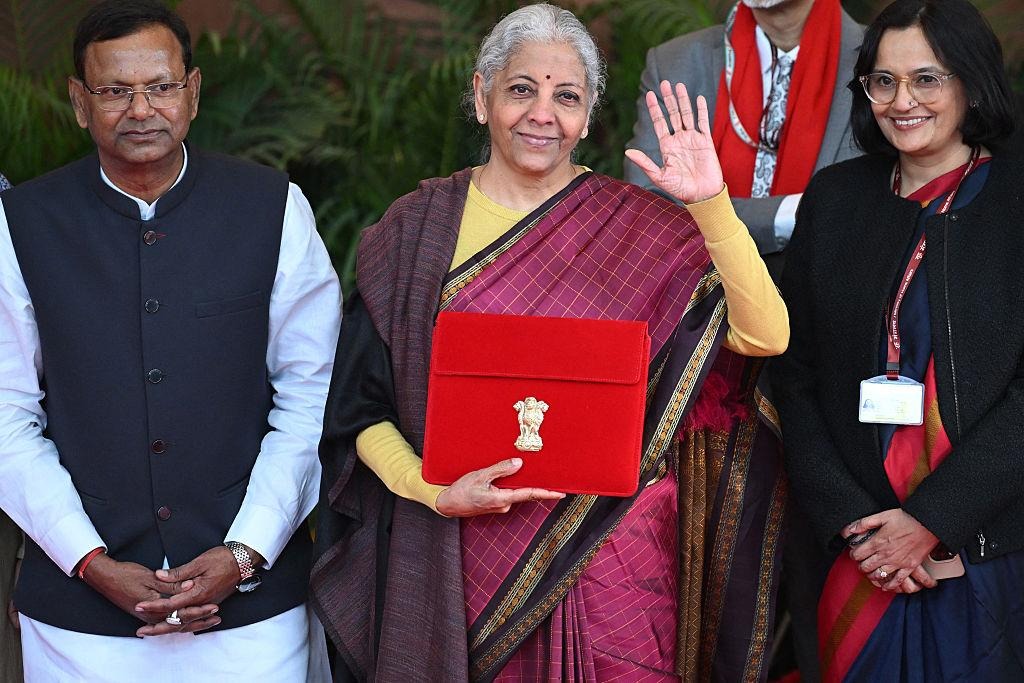
As the dust settles on the Union Budget 2026–27, presented by Finance Minister Nirmala Sitharaman, many in our school community—parents, educators, and administrators—are asking an important question:
Does the current Union Budget offer real relief, or is it primarily long-term reform framed in powerful rhetoric?
From our perspective as an educational institution, it is important to look beyond the headline figure of ₹1.39 lakh crore allocated to the Ministry of Education in the Recent Union Budget and understand what the Nirmala Sitharaman Budget truly means for the students, families, and educators who form the backbone of our society.
Presented as the first budget from the newly renamed Kartavya Bhawan, the Union Budget 2026 is anchored in a “Yuva Shakti” (Youth Power) framework. It positions schools not merely as academic centres, but as strategic national infrastructure that will power India’s next growth cycle.
A Production-First Vision in the Current Union Budget
The Nirmala Sitharaman Union Budget 2026 clearly reflects a “Production-First” strategy. Rather than offering widespread short-term relief, the government is betting on manufacturing growth, digital transformation, and capital expenditure to strengthen India’s long-term economic position.
While terms like “fiscal consolidation” and “capital expenditure” dominate media analysis of the Recent Union Budget, the real question for families is simpler:
What changes in our monthly budgets and our children’s classrooms?
For Our Parents: Relief Is Targeted, Not Universal
If you were hoping the Union Budget 2026 would significantly reduce income tax burdens, this may feel like a missed opportunity.
1. The Status Quo on Income Tax
There were no major changes to personal income tax slabs in the Current Union Budget. For most salaried families, take-home pay remains unchanged.
2. Investing Becomes Costlier
The hike in Securities Transaction Tax (STT) and removal of certain tax benefits on gold bonds mean families must be more strategic about savings and investment planning.
3. The Silver Lining
However, the Nirmala Sitharaman Budget 2026 does offer targeted relief:
- TCS (Tax Collected at Source) on overseas education reduced from 5% to 2%.
- Customs duties removed on 17 life-saving cancer drugs.
For families planning global education pathways or navigating long-term medical care, these measures under the Recent Union Budget provide meaningful financial support.
For Our Students: Preparing for a High-Tech India
This is where the Union Budget 2026 signals genuine structural reform.
The Nirmala Sitharaman Union Budget clearly outlines the kinds of industries that will shape the next decade—semiconductors, artificial intelligence, digital content creation, and advanced manufacturing.
1. The Technology Push
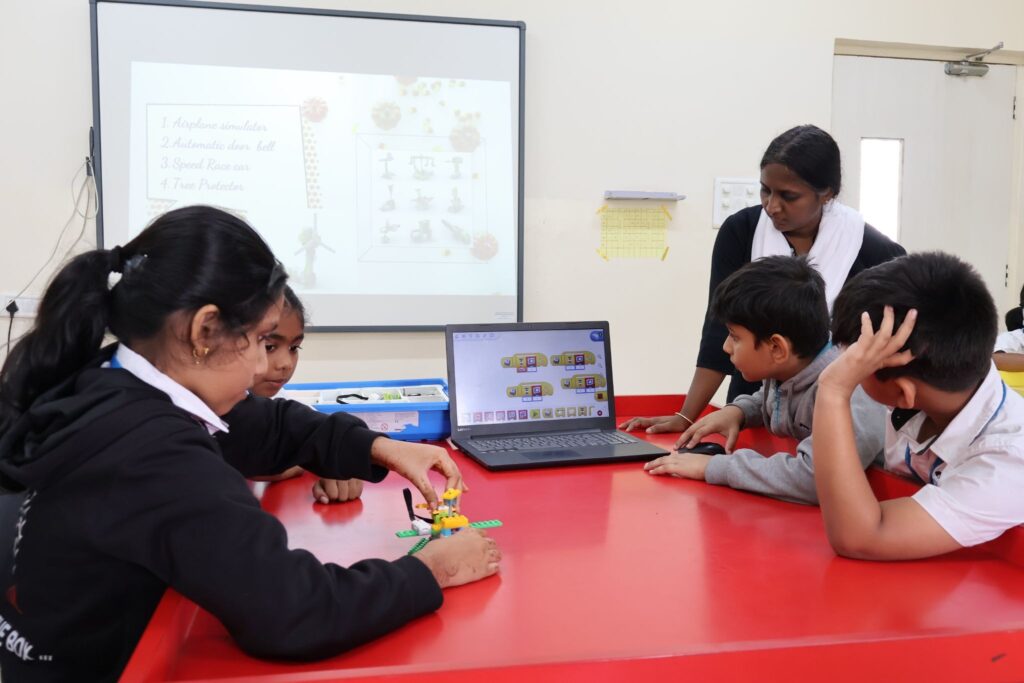
Major investments in semiconductor manufacturing (ISM 2.0) and AI reinforce that STEM education is not optional—it is foundational. The Current Union Budget supports digital infrastructure and proposes “Content Creator Labs” in 15,000 secondary schools, integrating AVGC (Animation, Visual Effects, Gaming, Comics) into mainstream education.
2. Vocational & SME Focus
The SME Growth Fund signals that future careers will not be limited to multinational corporations. Agile manufacturing, design-led enterprises, and skill-based entrepreneurship will play a major role. This may accelerate internship-based and vocational pathways within schools.
For today’s middle and high school students, the Union Budget 2026 acts as a career compass in an increasingly dynamic and AI-driven world.
For Schools: Infrastructure, Innovation, and Alignment
While the Recent Union Budget does not directly expand private school grants, its reform goals will influence institutional planning.
1. The Orange Economy & Creative Careers
The proposal to establish AVGC Content Creator Labs in 15,000 secondary schools signals that creative digital industries are now formal economic pillars. For schools, this reinforces the importance of integrating media literacy, design thinking, and digital storytelling into curricula.
2. Education-to-Employment Alignment
The formation of an “Education to Employment” Standing Committee aims to align school curricula with industry demand, especially AI integration. The Nirmala Sitharaman Budget thus attempts to bridge the gap between academic degrees and employable skills.
3. Design & Multidisciplinary Hubs
With a new National Institute of Design (NID) and integrated “University Townships,” the roadmap for senior secondary education is increasingly multidisciplinary and industry-linked.
4. Infrastructure & Connectivity
The ₹12.2–12.5 lakh crore public capital expenditure in the Current Union Budget is expected to improve logistics, roads, railways, and digital connectivity. For school communities, this translates into safer commutes and stronger broadband access over time.
Relief vs Reform vs Rhetoric
Relief
Limited and targeted. While overseas education and health-related measures provide genuine support, middle-class income tax relief remains minimal in the Union Budget 2026.
Reform
Substantial. The Nirmala Sitharaman Union Budget 2026 makes a clear pivot toward a tech-heavy, self-reliant, services-led growth model that directly impacts future education pathways.
Rhetoric
As with every budget, execution will determine success. Increased funding for Samagra Shiksha and PM-SHRI schools must translate into measurable learning outcomes. Digital equity—ensuring broadband access for every government secondary school—will be the real test of whether the promises of the Recent Union Budget become reality.
Strategic Institutional Summary
| Key Budget Initiative | Impact on School Stakeholders | Verdict |
| AVGC Content Labs | Exposure to creative tech careers from Grade 9 | Reform |
| Lower TCS (5% to 2%) | Significant savings for study-abroad families | Relief |
| ₹1.39L Cr Allocation | Record funding; stability for KV/NV networks | Stability |
| AI in Curricula | Transforming how we teach and assess | Future-Proofing |
Conclusion: What the Union Budget 2026 Ultimately Asks of Us
The Union Budget 2026 is not a handout-driven budget. It is a structural, production-oriented blueprint. The Nirmala Sitharaman Budget asks citizens to invest energy today into the skills of tomorrow.
For schools, the responsibility is clear:
Translate national reform into meaningful classroom innovation.
We are not preparing students merely to pass examinations. In alignment with the direction set by the Current Union Budget, we are preparing them to lead in an India that is increasingly digital, creative, entrepreneurial, and globally connected.
(Explore more about Governance)
(Know more about Chrysalis High)
Written By – Amrita Paul,
School Coordinator – Chrysalis High
Frequently Asked Questions:
The Union Budget 2026 allocates ₹1.39 lakh crore to the education sector and focuses on AI integration, digital infrastructure, and the introduction of AVGC Content Creator Labs in 15,000 secondary schools.
The Nirmala Sitharaman Budget maintains the existing income tax structure, offering limited relief. However, it reduces TCS on overseas education from 5% to 2% and removes customs duties on certain life-saving medicines.
The current Union Budget emphasizes emerging sectors such as artificial intelligence, semiconductors, digital content, and advanced manufacturing, encouraging schools to focus on STEM, digital skills, and vocational learning.
The recent Union Budget focused more on structural reform than universal tax cuts. While there were no major changes to personal income tax slabs, families benefit from customs duty exemptions on 17 life-saving cancer drugs and targeted digital infrastructure improvements that lower the long-term cost of technology and connectivity.
The Nirmala Sitharaman Union Budget reduces the Tax Collected at Source (TCS) on overseas education expenses from 5% to 2%, making international education more affordable for families.
At Chrysalis High, the focus is on future-ready learning through technology integration, skill-based education, creative thinking, and career-oriented programs, aligning with the vision of the Union Budget 2026.