
Most school tours go pretty much the same way. Someone walks you around for forty minutes, points out the library, maybe parks you in the back of a classroom for a bit while the children work quietly, because that is usually what happens when there is a stranger standing in the room. Then you leave, and you probably do feel a bit better about the school, that is kind of the whole point of a tour. But none of it actually tells you what a random Tuesday looks like when nobody is watching.
Because the real question every parent has is not “does this school look nice.” It is “what will my child’s actual day look like here?” What happens between the first bell and the last one? Do they get stuck and stay stuck, or does someone notice? Do they get to ask the “silly” questions?
So we thought we would walk you through it. Not the brochure version, the real one.
Before the Lesson Even Starts
Honestly, the school day kind of starts before anyone realizes it has. Not when the teacher claps or says let us begin, but way earlier than that, the moment a child actually walks in and dumps their bag on the chair.
Before that first lesson actually kicks off, it is total chaos, ten minutes of nothing but bags getting dumped everywhere, someone still going on about a video from last night that literally nobody asked about, another child tearing through their bag because their maths notebook has apparently vanished into thin air. Half the class ends up standing around someone’s desk for no reason. Nobody is sitting properly. And then somehow, without anyone really deciding it, things just calm down.
It seems like nothing, but it is doing more than it looks like. That is basically how a child stops being half asleep from the car ride and actually gets their head into the day. So by the time the teacher is actually talking, most of them have already come around on their own.
It Is Louder Than You Would Expect
Ask your child what happened in class and if all you get is “we just wrote notes,” something is probably off. That is not really what a Chrysalis High classroom looks like most days. Children are talking, arguing a little, sometimes getting things flat out wrong in front of everyone, which honestly ends up mattering more than getting it right.
You ask one simple question and suddenly you have got five different answers flying around the room, and one of them is just completely off. Does not really matter though. Someone in the back who looked half asleep two minutes ago will suddenly go “wait, that is not right.” Or someone asks something so specific and out of nowhere that you can actually watch the teacher pause and think about it before answering.
That messiness is actually the point. Not every child gets a concept the same way or at the same speed. One child needs the textbook example. Another only gets it once a classmate explains it in their own words. A third needs to just attempt the problem and fail at it twice before it clicks.
Children raising their hand to say “wait, I am lost” is one of the best sounds in that classroom, even though it does not feel that way to the child saying it. It is not admitting defeat, it is basically handing the teacher a map of exactly where they need to slow down. Way more useful than a child just nodding along and hoping it clicks eventually.
The Beautiful Mess of Working Together
Some parts of the day are quiet, heads-down, work-on-your-own time. Other parts throw children into a group and say “figure this out together.” Both matter.
Group work is rarely neat. One child will do most of the talking. Another will barely say anything for the first ten minutes and then drop the one idea that solves everything. Someone will disagree with the plan and the group has to actually work that out, not just steamroll them.
That mess is kind of the whole point, if you think about it. A child figuring out how to explain something to a friend who just does not get it yet, that teaches them more than the actual assignment does. Same with the child who has to figure out how to disagree with someone without the whole group falling apart, or the one who wants their idea to win but eventually gives a little so the group can just move forward.
And it does not stop when the group breaks up. A child will go back to working alone and still be turning over something a classmate said. That sticks longer than most lectures do.
Learning by Doing, Not Just Writing
Some things just do not land through notes alone. You can explain how something works for twenty minutes, or you can hand a child the materials and let them mess with it for five.
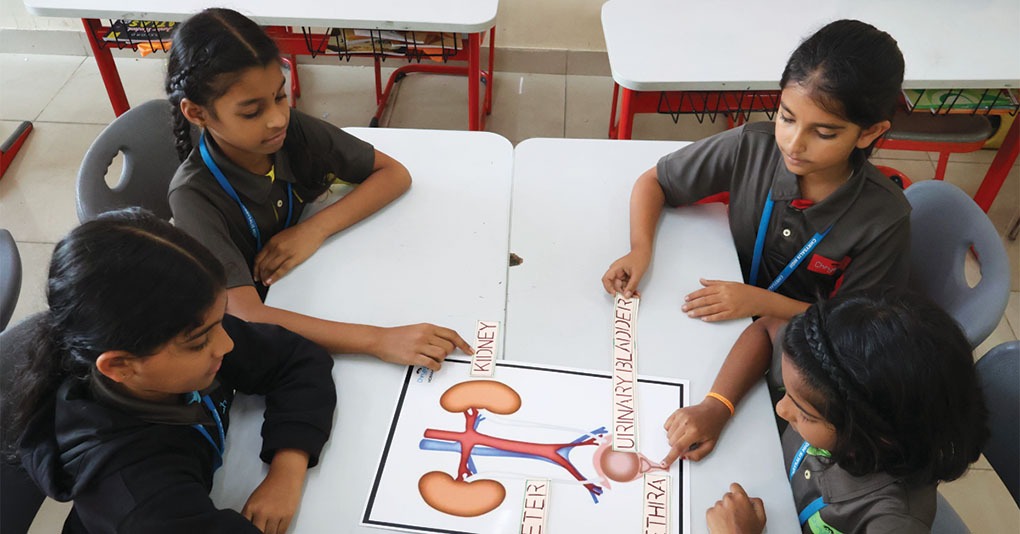
So a good chunk of the day is hands-on. Building something, testing something, comparing two approaches, running an experiment that might not even work the first time. And that is fine because that is often the better outcome.
Because when something fails, children start asking the real questions: why did this not work? What if we tried it differently? Is there another way to do this? That is a much more useful skill than getting the right answer on the first try.
Recess Is Doing More Than You Think
Then there is the break. Lunch comes out, books get shoved aside, and the conversations that had to wait through class finally happen.
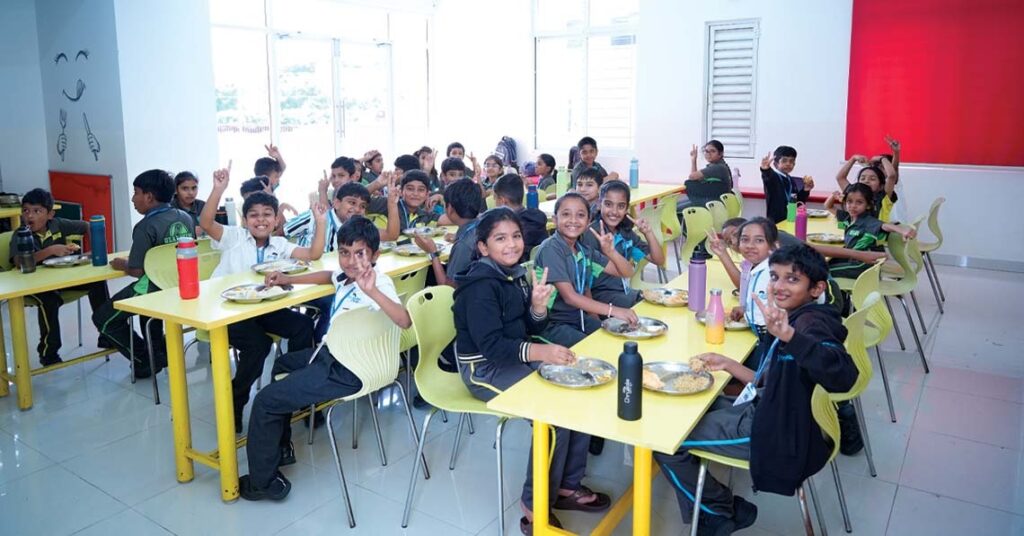
It is easy to think of break time as just downtime between lessons. It is not. This is where friendships actually get built. Where a disagreement from earlier gets sorted out. Where a child who is normally quiet finally joins a game with a new group.
If you ask your child about their day and they skip straight to “Aditi let me play with her new pencil case” instead of talking about long division, that is not them dodging the question. That, to them, might genuinely be the highlight. And it matters more than it sounds, because a child who feels like they belong is a child who is more willing to raise their hand later.
Teachers Notice the Quiet Stuff Too
While all of this is happening, our teachers are watching for more than just right and wrong answers.
They notice when the usually chatty child has gone quiet all morning. They notice when someone is following along fine until the topic gets a little harder, and then starts to check out. They notice the hand that almost goes up and then does not.
You probably will not catch a child actually saying it out loud. What you will notice is smaller than that, their pencil just kind of stops moving, or they are doodling something dumb in the margin instead of the actual work, or they are staring at one line in the book way longer than anyone needs to read one line. That is usually the whole story.
And usually a teacher will not just spit out the answer either, even though that would take five seconds and save everyone the trouble. It is more like they will crouch down and go, okay, so what have you tried so far, or, where exactly did this stop making sense to you. Does not sound like much, but ask a child that enough times and eventually they stop waiting around to be rescued and just start poking at the problem on their own.
One Subject Never Tells You the Whole Story
No single subject tells you who your child is. That is kind of the whole point of a full school day.
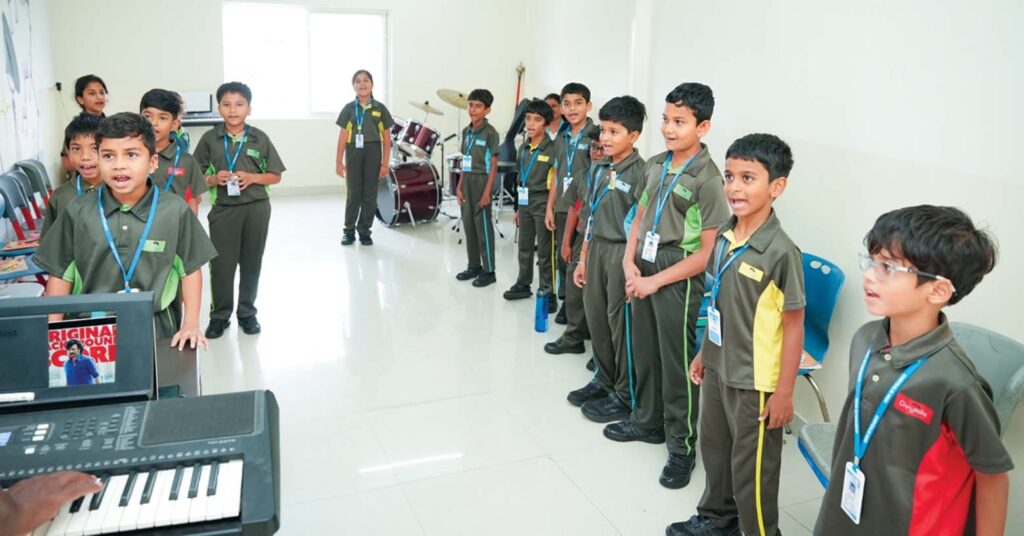
Take a child who barely says a word during math, the kind of quiet where you would assume they are just not that into school. Put a paintbrush in their hand an hour later and suddenly they will not stop talking about color choices. Or the one who cannot get a paragraph out on paper to save their life, but somehow ends up being the person everyone in the group project is listening to. You just do not see that side of them until the day actually gives them a reason to show it.
By the Afternoon, Things Look a Little Different
By afternoon, a child has been through a handful of lessons, a couple of arguments with friends, one activity that went great and maybe one that did not. Their energy is usually lower than it was at 9 AM. That is normal.
There might have been a small win in there, a concept that finally clicked, a question answered even though they were nervous to speak up. There might also have been a rough patch, a forgotten answer, a mistake that needs fixing tomorrow.
Neither of those means the day went badly. A day with a bit of struggle in it is still a day where a child learned something, sometimes more than a smooth one.
What They Actually Bring Home
At pickup time, the visible stuff comes home too, books, worksheets, maybe homework for tomorrow.
But there is a lot that comes home that you will not see in the bag. A question that is still bugging them. Something a friend said that made them laugh. A quiet bit of pride about finally speaking up in class. Sometimes, a concept they still have not quite cracked, and that is okay too. Not everything wraps up neatly by 3 PM. Some things follow a child into the next day, and that is just how learning actually works.
The Part That Never Gets Graded
From the outside, a school day looks pretty routine: come in, sit through classes, take a break, go home. Nothing dramatic about it.
But if you actually asked the child living through it, they would probably tell you the day was made up of a hundred tiny things that will never show up on any report card. Like the moment a confusing idea suddenly just clicked or a random five-minute chat with a friend that somehow stuck with them more than the actual lesson did or a teacher who caught them struggling before they even said anything, and just knew exactly what to say.
Children do not grow through one big breakthrough moment. They grow through hundreds of ordinary ones, stacked up, day after day. And that, more than anything on a timetable, is what a day at Chrysalis High is actually about.
Frequently Asked Questions
A day at Chrysalis High is far more dynamic than the “sit quietly and take notes” stereotype. Classrooms are active spaces where children discuss, debate, get things wrong out loud, and work through ideas together. This back and forth is intentional. It’s how teachers gauge who has understood a concept and who needs another way in.
Rather than moving on once one method has been explained, teachers at Chrysalis High treat every wrong answer or “I’m lost” as useful information. A child who struggles with a textbook example might grasp it once a classmate rephrases it, or once they attempt and fail at the problem first. Lessons are built to accommodate this range of learning speeds within the same classroom.
Because that’s where kids actually learn to work with people, not just solve the problem. Explaining something to a classmate who’s stuck, standing your ground in a disagreement, knowing when to give a little so the group moves forward. That stays with them long after the assignment is graded.
A good chunk of it. Kids spend real time building things, testing things, and running experiments that do not always work out. When something fails, they are pushed to ask why instead of moving straight to the next task. That question matters more to Chrysalis High than getting the answer right on the first try.
Yes, and probably more than you would guess. Kids sort out half their arguments over lunch, not in class. A quiet one might finally join a game because a friend dragged them in. You will not see any of that on a report card, but it shapes how comfortable a child feels raising a hand the next day. At Chrysalis High, that time counts for just as much as a lesson does.
Teachers are trained to look past right and wrong answers to smaller signals, like a pencil that has stopped moving, a page stared at for too long, or a usually talkative child gone quiet. Instead of simply giving the answer, teachers ask guiding questions like “what have you tried so far,” helping children build the confidence to work through problems on their own.