Introduction
It’s essential to know about gender in English grammar for kids. Some words are very clear about who they refer to, like “father” or “sister.” Others are more open-ended.
Look around you. Have you ever seen words that can mean both boys and girls? The name for these is “common gender words.” This guide helps students understand common gender examples with pictures, making learning enjoyable and remembered.
What Is Common Gender?
Nouns that can be used to talk about both male and female people or animals are called “common gender.”
Common gender words are gender-neutral nouns, as opposed to masculine and feminine nouns like “king” and “queen.” Among them are:
- A teacher can be a man or a woman.
- A doctor can be either a male or a female medical worker.
- A friend can be a boy or a girl.
- Students can be used for both male and female students.
People can use these words because they don’t assume gender and are open to all kinds of conversation.
Visual Examples of Common Gender Nouns
Children can connect words to real-life situations with the help of pictures. Take a look at these common gender examples with pictures to help you understand better:
1. Teacher in a Classroom:


The pictures show a male and female teacher standing beside a whiteboard with kids around them.
This is a common gender noun: teacher. Our language doesn’t change based on gender.
2. Doctor in a Hospital:

The picture shows a male and a female doctor working together in a hospital room.
A “doctor” can be any trained medical worker, male or female.
3. Friends Playing Together:

The picture shows kids playing.
No matter if they are boys or girls, we call them friends.
4. Student in a Library:
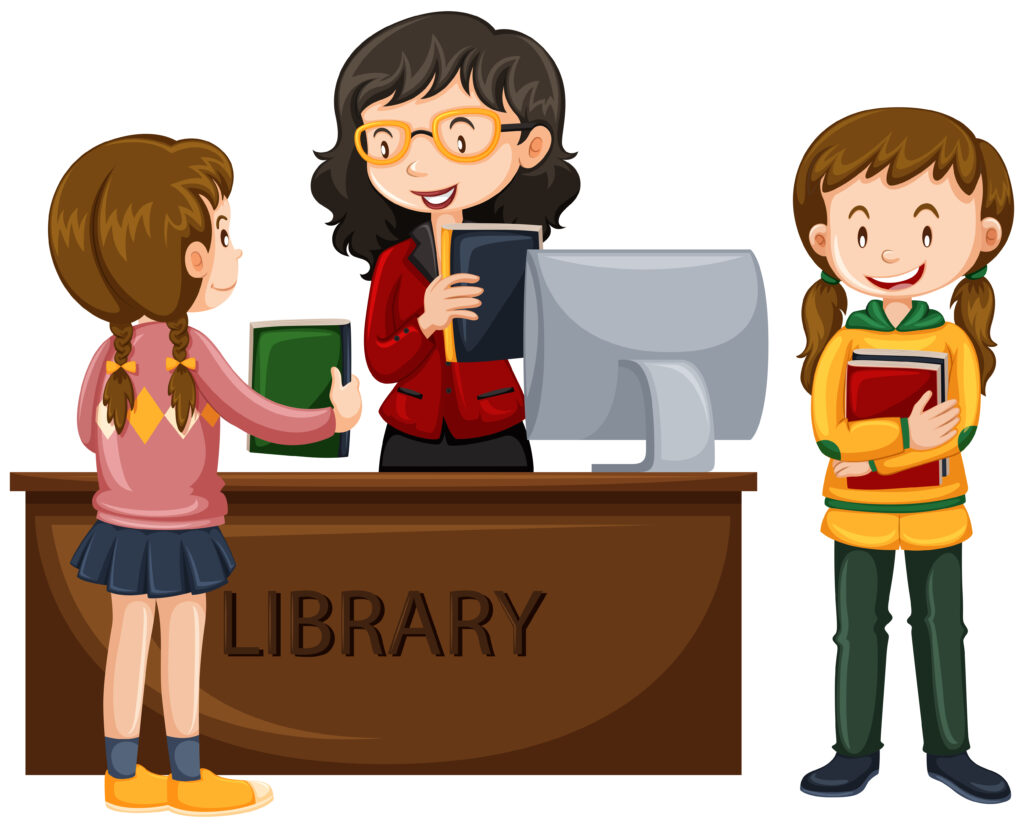
The picture shows girls borrowing book at a library table.
Students are all kinds of learners, male and female.
For people who learn best by seeing, using common gender examples with pictures helps them understand the idea better.
Common Gender in Sentences
Here are some examples of sentences that efficiently use these gender-neutral nouns:
- The teacher is telling the class what they need to learn.
- This evening, my friend is coming over to play.
- The doctor is friendly and willing to help.
- The student who did the best illustration won.
- The painter made a lovely picture.
These examples demonstrate how easily common gender terms can be incorporated into everyday speech and writing. It helps in making them a crucial component of gender vocabulary for kids.
Importance of Understanding Common Gender
To communicate clearly and politely, you need to know when and how to use common gender terms. This is why:
- Promotes Inclusivity: You can avoid making assumptions about someone’s identity by using gender-neutral nouns.
- Improves Sentence Formation: It helps students follow the rules of English grammar for kids correctly.
- Builds Respect for All Genders: It promotes fairness and equality, especially when dealing with groups of people of different genders.
- Enhances Clarity in Communication: Using the same gender for both men and women lowers misunderstanding, especially at work and in school.
For kids, learning common gender examples with pictures can also help them learn how to talk to others thoughtfully and helpfully.
Interactive Activity
This fun and visual project will help students actively spot and sort gender-neutral nouns.
Activity Description:
Let’s play a game and learn! Teachers can make a deck of flashcards with a picture and a word on each one, like “king,” “student,” or “nurse.” Split the class up into little groups.
Instructions:
- Show each card to the kids one at a time.
- Ask them to put the word in one of these three groups:
- Masculine (e.g., uncle, king)
- Feminine (e.g., mother, queen)
- Common Gender (e.g., friend, doctor, teacher)
- After putting all the cards in order, talk about the answers and explain why each word fits in its own group.
Bonus Tip:
Teachers can help students connect the words to people they know by giving them real-life examples and situations. In order to reinforce their gender vocabulary for kids, this game combines images and interaction.
Conclusion
Overall, common gender terms are words that we use for both men and women. Everyday words that show this are teacher, doctor, friend, and student. Using common gender examples with pictures to help you learn makes it fun and valuable.
Take a moment to think the next time you hear a word like “friend” or “doctor.” It could mean anyone! Use these words more and more in your talks until you feel comfortable using language that includes everyone.
FAQ
What is the common gender in English?
Some words, like teacher, doctor, and friend, can be used for both men and women. This is called “common gender.”
Can you give examples of common gender nouns?
Yes! Examples include students, friends, doctors, teachers, and children.
Why is it important to understand common gender?
Understanding gender-neutral nouns encourages acceptance, stops bias, and helps kids learn how to talk to each other in a polite way from a young age.
How can I identify common gender nouns?
It’s a common gender word if the noun doesn’t say whether it’s male or female and can mean either. Examples include “parent” or “cousin.”
Can I use common gender nouns in sentences?
Absolutely! For example: “The doctor is examining the patient” or “My friend lives nearby.”